Most startups get video wrong in one of two ways.
They wait too long, holding off until the brand feels ready or the budget feels comfortable. They move fast without a plan and spend $10K on a cinematic brand film before the message is clear.
Both mistakes burn runway.
Video production for startups is not the same as general video marketing. The timeline is compressed, the budget is limited, and your audience might be an investor, a first customer, and a key hire all in the same week.
The startups that use video well treat it as a business tool. Every video should solve a specific problem. Investor confidence, landing page conversions, talent recruitment. If it does not tie back to a real outcome, it is not worth producing yet.
Why Startups Need Video Earlier Than They Think
Video solves core business problems that exist long before your brand is fully formed.
Investor clarity, early customer acquisition, recruitment, and brand credibility are all problems that the right startup video can address from day one. A well produced video showing your founder story and product vision helps investors see the opportunity clearly. A strong product demo or explainer video educates your first customer and moves them toward a decision. A culture video communicates mission and values to candidates who might otherwise choose a safer option.
The same logic applies to small business video production. According to HubSpot, 91% of businesses now use video as a marketing tool. Startups that delay are not just late, they are already behind.
The Startup Video Priority Stack by Funding Stage
Not all videos are equally urgent. The right startup video depends on where you are in your growth stage and what business problem you need to solve right now.
Pre-Seed and Seed: Credibility and Vision
Your priority at this stage is the founder story, pitch video, and a basic product demo.
Investors at pre-seed and seed are betting on the team and the vision more than the product. A 60 to 90 second founder story or startup story video that clearly communicates the problem, the solution, and why you are the right team to solve it will do more for your fundraising than a polished brand film ever could.
Authenticity matters more than cinematic visuals here. Your first customer and your early investors want clarity, not production polish. Some of the most effective seed stage videos we have produced were shot in a single day with a lean crew and a tight script.
Series A: Validation and Conversion
At Series A the priority shifts to explainer videos, customer testimonials, and a recruitment video.
You have early traction. Now you need to prove it scales. Customer testimonials showing real product value carry significant weight with Series A investors. Explainer videos with higher production value support customer acquisition and improve landing page performance. A recruitment video helps you compete for the talent you need to grow.
This is the stage where professional video production services start to pay for themselves in measurable ways. At this stage we typically recommend starting with a hero explainer video and one strong customer testimonial before expanding the content library.
Series B and Beyond: Market Leadership
At Series B and beyond the goal is brand positioning and enterprise credibility.
Brand films, detailed case studies, and thought leadership content establish your company as a category leader. Video supports PR campaigns, trade shows, and longer sales cycles with enterprise teams. Production value matters more at this stage because perceived market leadership is part of what you are selling.
Get that match right and the rest of the decisions, budget, style, format, become a lot easier.
Types of Videos Startups Actually Need
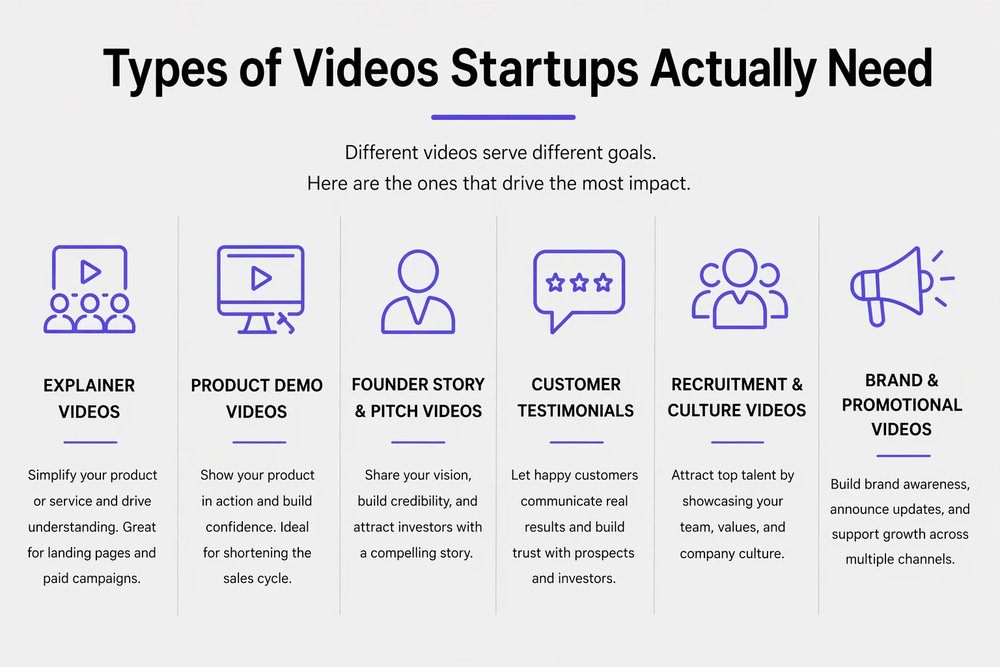
Before you brief a startup video production company or set a budget, it helps to know exactly what each video type does and when it earns its place in your strategy.
Explainer Videos
The workhorse of startup video production. Explainer videos take a complex product or idea and make it immediately understandable for your target audience. A well produced explainer on your landing page can meaningfully lift conversion rates from day one. According to Wyzowl, 89% of consumers say a brand video convinced them to make a purchase.
The animation vs. live action decision usually comes down to your product. Animated explainers work best for SaaS, fintech, AI, and tech industry products where there is nothing physical to film yet. For saas startups in particular, visual storytelling through animation is often the clearest way to show what the product actually does. Creamy animation styles and polished motion graphics signal brand investment and build credibility early.
Live action works better when the human element is the point, founder stories, testimonials, and culture content all perform stronger with real faces. Many startups use a hybrid approach, combining live action footage with motion graphics and visual effects to show a real product interface while using animation to guide the viewer's attention.
For a full breakdown of what these videos cost, see our guide to explainer video costs.
Product Demo Videos
Product demo videos show your product in action. Less about storytelling, more about proof. For B2B startups, strong product demos shorten the sales cycle by answering objections before a rep gets on the phone.
Founder Story and Pitch Videos
Investor-facing by nature. A founder story communicates vision, credibility, and the human behind the company. Pitch videos distill your market opportunity into a format investors can watch, share, and return to during due diligence.
Customer Testimonial Videos
Nothing builds trust faster than a real customer explaining the value your product delivered. Testimonial videos are powerful at Series A and beyond, both for investor conversations and customer acquisition.
Recruitment and Culture Videos
A short culture video showing your team, your mission, and your working environment helps you compete for talent without competing on salary alone.
Brand Films
A Series B and beyond investment. Brand films establish market positioning, communicate company values at scale, and support enterprise sales and PR efforts.
Promotional Videos
Promotional videos and branded content work across the full funnel. Short form video cuts from a promotional shoot can run as paid social ads, email campaigns, and organic content across digital channels simultaneously.
Crowdfunding Videos
A crowdfunding video is one of the highest stakes videos a startup can produce. Campaigns that include video tend to raise significantly more than those that do not.
The format is specific. A founder led pitch, a clear statement of the problem, a product demo, some proof of manufacturing or fulfillment credibility, reward tiers, and a strong call to action. Two to three minutes is the sweet spot for Kickstarter or Indiegogo.
For early stage startups raising through crowdfunding, this is often the first piece of compelling content the business ever produces. Getting the script and concept development right early determines whether the campaign hits its goal.
Want a deeper look at each of these? We broke down the best video types for startups and small businesses in a separate guide.
Startup Video Production Budget Reality Check

Most video production companies are vague about pricing until they have you on a call. Here is a straight answer on what each investment level gets you.
What a $5K Budget Gets You
Best for pre-seed and seed stage. One well-executed video that communicates your message clearly.
- Single camera setup, basic lighting and audio
- One primary deliverable, 60 to 90 seconds
- Clean editing, basic lower thirds and graphics
- No animation, multiple locations, or platform-specific cuts
One video. One message. Done well, that is enough at this stage.
What a $15K Budget Unlocks
The sweet spot for Series A companies needing professional video production services across more than one business function.
- Multiple interview subjects or locations
- Multi-camera setups with better lighting and polish
- Quality motion graphics and social cuts
- Multiple platform versions from one production day
A good startup video production company at this budget turns one shoot into a full range of assets.
What $30K and Above Looks Like
A Series B and beyond investment focused on brand positioning and market leadership.
- Brand films and high-end promotional videos
- Full motion graphics and professional cinematography
- Larger crews and more complex post production
- Multiple videos serving different funnel stages
The risk at this level is spending everything on a single hero asset. Spread the investment across multiple videos instead.
Monthly Subscription Plans
Some startup video production companies now offer monthly subscription plans as an alternative to per project pricing. These typically start around $5,000 a month and include access to a full creative team for ongoing content creation across explainer videos, product demos, social cuts, and marketing videos.
This model works well for startups past Series A that need a steady flow of video content but do not want to negotiate a new scope every time. It gives growing teams a predictable budget and a faster turnaround on the next video, without starting the production process from scratch each time.
Where to Invest vs. Where to Cut Corners
Not every part of the production process delivers equal return. Knowing where quality directly affects your results, and where flexibility exists, is how you stretch a limited budget without sacrificing impact.
Script, Strategy, and Messaging: Never Cut These
This is where your video either works or it does not.
Script and strategy define the outcome before a single camera turns on. If your message is unclear, your value proposition is weak, or your target audience is not properly defined, no amount of production polish will save the video.
Invest time and budget here. Get the messaging right. Test your core narrative before you commit to a full production. We spend more time in pre production with startup clients than any other segment we work with, because getting the message wrong at this stage is the most expensive mistake you can make.
Equipment, Locations, and Crew Size: Where Flexibility Lives
A smaller crew, a single camera setup, rented lighting, and a local or in-house location can all reduce costs significantly without destroying the final product.
For social content, culture videos, and quick testimonials, simpler setups work well. Remote recording tools and AI-assisted workflows make it easier to produce high quality video content that looks professional without a large on-set footprint. Basic editing software can handle simple cuts and social content just fine, but for anything client-facing or investor-facing, a professional final edit is where the difference actually shows.
Do not let the idea of cinematic visuals drive decisions that your current stage does not require.
Editing and Post Production: Not the Place to Go Cheap
Post production is where raw footage becomes something your audience actually wants to watch.
Editing, color grading, sound design, and motion graphics all contribute to perceived quality in ways that viewers feel even if they cannot name. Cutting corners here undermines everything upstream.
That said, post production can balloon fast. Scope it clearly before production begins. Define your deliverables, limit revision rounds, and be specific about final delivery timelines. The shoots that go sideways almost always trace back to a scope that was never clearly defined.
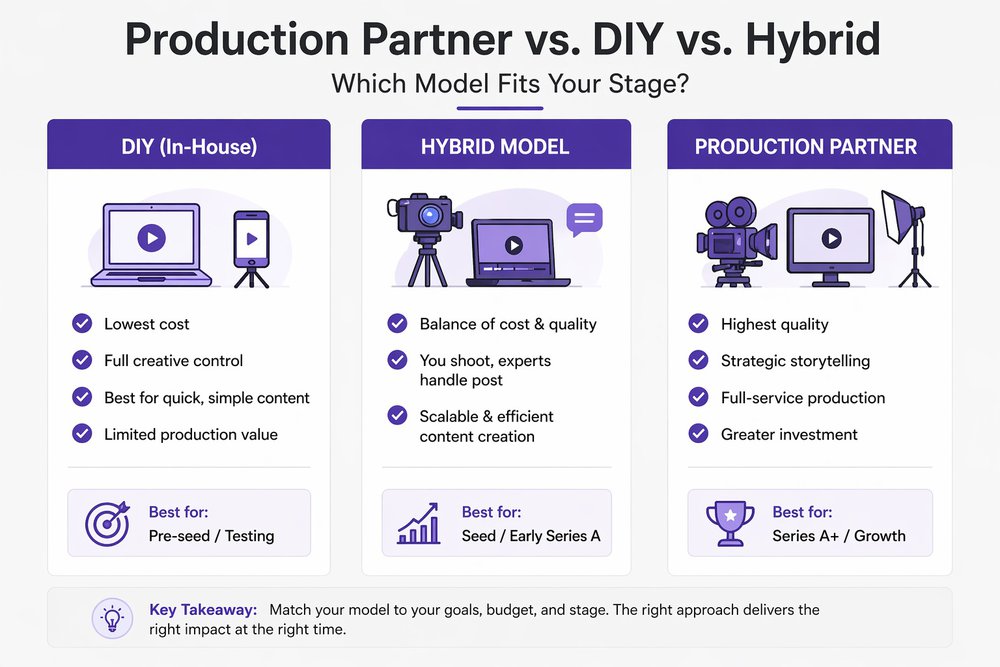
Production Partner vs. DIY vs. Hybrid: Which Model Fits Your Stage
When DIY Makes Sense
DIY works when budget is tight and speed matters more than polish.
Founder updates, quick product walkthroughs, and internal culture content can all be produced in-house without hurting your brand. Smartphone cameras, basic lighting kits, and free editing tools are enough for digital channels like LinkedIn and Instagram Reels.
Use DIY to test messaging before committing budget to professional video production.
When to Bring in a Professional Video Production Company
When the stakes of the output are high, professional video production services pay for themselves.
Investor-facing content, landing page hero videos, and customer-facing explainer videos all directly affect conversion and credibility. If video is directly influencing a funding round or a revenue outcome, do not cut corners on quality.
The Hybrid Model
Your team captures raw content in-house. You outsource editing, motion graphics, and sound design to a professional partner. Lower shoot costs, professional final edit.
For seed and early Series A startups, this model delivers the best ratio of quality to cost while enabling higher video content volume across more channels.
Choosing the Right Video Production Partner
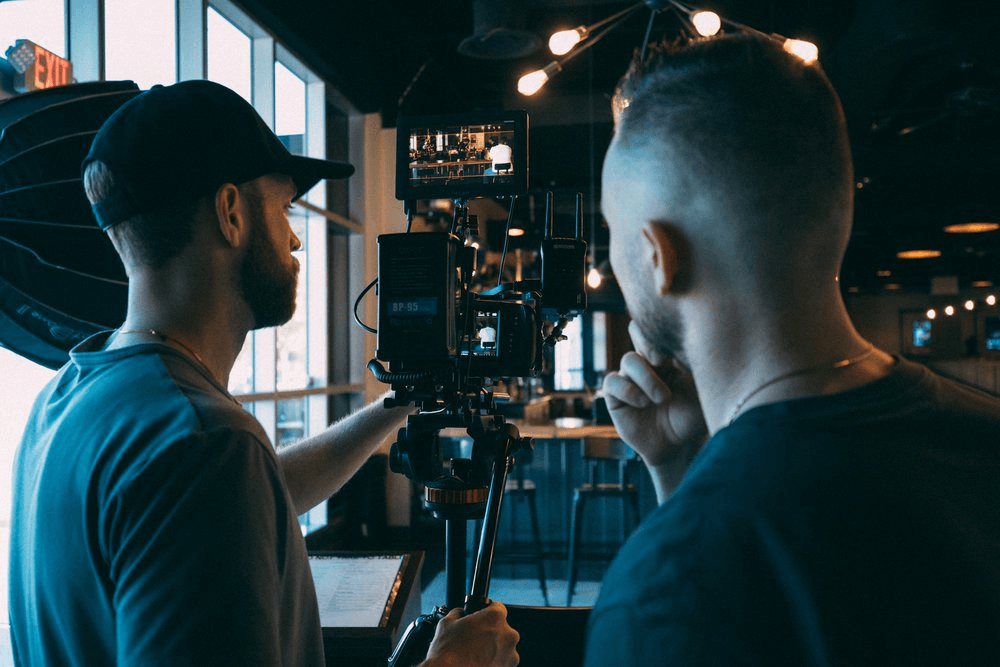
Look for a video production company that asks about your business goals before they talk about cameras. Review their experience with startups at your stage. Understand what video services are included in their process, how revisions work, and what deliverables you walk away with.
Common Startup Video Mistakes That Burn Budget
- Overproducing too early. High production value cannot fix an unclear message. Get the script and strategy right before you spend on cinematic visuals.
- No distribution plan. If you have not decided how you are promoting the video before production starts, you are already behind.
- Leading with features instead of outcomes. Investors and customers respond to results, not specifications. Start with the problem, not the product.
- Ignoring the CTA. Every video needs a clear next step. Investor video drives to a meeting. Customer video drives to a demo or signup. Recruitment video drives to an application.
- Producing too many videos at once. One well-executed video with a strong distribution strategy outperforms three mediocre ones every time.
- Skipping pre production. Jumping straight to the shoot without a locked script, clear brief, and agreed deliverables leads to expensive revision cycles and scope creep.
- Measuring the wrong metrics. Views and likes are not business outcomes. Tie every video to a metric that actually matters: conversion rate, investor meetings booked, qualified applications received.
How to Turn One Production Project Into 5+ Video Assets
Plan for Derivatives Before You Start
Before the camera turns on, map out every asset you need, not just the hero video. A 2 to 3 minute explainer or brand story video becomes the core asset. Everything else gets derived from the same footage.
From one production day you can typically create:
- A primary hero video for your website or investor deck
- 30 to 60 second cuts for paid social and digital channels
- 15 second teasers for Instagram Reels and LinkedIn
- A behind the scenes clip for culture and recruitment content
- Vertical formats optimized for mobile viewing
The Core Asset Plus Derivative Model
Produce one primary video with a tight script and clear purpose. Then brief your video production company to capture everything needed for shorter cuts and platform-specific versions during the same shoot.
This means capturing both horizontal and vertical framing, shooting additional b-roll, recording multiple takes of key soundbites, and planning interview questions that serve more than one video type. A full range of formats captured in a single day means your startup grows its content library without scheduling additional shoot days.
Match the Format to the Channel
- Long form video (2 to 3 minutes): website, investor presentations, YouTube
- Short form video (under 60 seconds): LinkedIn, Instagram, paid social
- Vertical video: Instagram Reels, TikTok, mobile-first campaigns
- Square format: email campaigns, organic social posts
Always add captions. A significant portion of viewers watch without sound. You have about three seconds before someone scrolls. Make them count.
The Bottom Line
The startups that get the most out of video are not the ones with the biggest budgets. They are the ones who know exactly which video to make, at which stage, and why.
Your funding stage determines your priorities. Your budget determines your production model. Your message determines whether any of it works.
Never cut corners on script, strategy, and messaging. That is where the return on your video investment is won or lost.
When you are ready to invest in startup video production that actually drives results, talk to the Levitate Media team. Whether you are an early stage startup looking for your first explainer or an enterprise team scaling video across every channel, we will help you figure out exactly which video to make first, what to spend, and how to get the most out of every production day.
See our video pricing or explore our work to get started.
Insights from