Testimonial videos are professionally produced video testimonials that showcase real customers sharing measurable results and authentic experiences. When structured correctly, these videos build trust, reduce friction in the sales process, and help potential customers move forward with confidence.
Unlike written testimonials, customer testimonial videos allow prospects to see credibility and hear conviction. That human layer strengthens social proof and reinforces your brand story.
When produced strategically, testimonial videos do more than collect positive feedback. They help close deals.
What Makes A Great Testimonial Video?
A good testimonial video clearly explains a customer's challenge, the decision process, and the measurable results achieved. It features real customers speaking naturally, highlights specific outcomes, and maintains professional video and audio quality. The strongest testimonial videos feel authentic while staying focused on business value.
Why Testimonial Videos Outperform Other Proof Formats
Written testimonials inform. Video testimonials convert.
The difference is credibility.
Nielsen's Global Trust in Advertising report found that 92% of consumers trust recommendations from people they know more than any other form of advertising. Peer-based proof carries more weight because it reflects real experience, not corporate messaging.
Customer testimonial videos apply that same principle to your business. When prospects hear real customers describe their challenges, decisions, and measurable results, social proof becomes tangible.
That credibility reduces friction in the sales process.
Unlike written testimonials, video testimonials add tone, expression, and context. That human layer builds trust faster and helps potential customers evaluate your company with greater confidence.
For marketing leaders, testimonial videos are not just content. They are proof assets designed to influence purchase decisions.
Types of Testimonial Videos (& When to Use Each)
Not all testimonial videos serve the same purpose. The format you choose should reflect where your target audience is in the sales process and how much context they need to move forward.
Long-form narrative case study
This format typically runs two to three minutes.
It follows the customer's journey from initial challenges to measurable outcomes. It often includes supporting visuals, product usage footage, and specific performance metrics.
Long-form testimonial videos work best on:
- High-intent landing pages
- Sales presentations
- Proposal follow-ups
- Enterprise deal support
When prospects are close to purchase, they want detail. A narrative-driven customer testimonial video provides clarity and reinforces confidence.
For technology brands navigating complex buying cycles, our guide on How AI Companies Can Use Video Testimonials explores how testimonial strategy shifts in high-consideration industries.
Short social proof clip
These are concise video testimonials, often 30 to 60 seconds.
They focus on one strong outcome or statement. The goal is not to explain the entire success story but to highlight a powerful result or positive experience.
Short testimonial videos perform well on:
- Social media platforms
- Retargeting ads
- Website homepage sections
- Email campaigns
They help attract new customers by delivering proof quickly.
Panel or multiple speakers
In some industries, decisions involve multiple stakeholders. Featuring several satisfied customers or multiple representatives from one client reinforces credibility.
This format shows alignment across departments and builds additional trust. It demonstrates that your service delivered value at more than one level within the organization.
When structured correctly, these testimonial videos reflect depth, not just surface-level positive feedback.
Choosing the right testimonial format is a strategic decision, not a creative preference.
The goal is to match the story, the audience, and the stage of the sales process. When those elements align, testimonial videos become high-performing business assets instead of generic marketing content.
How to Get Clients to Say the Right Things on Camera
The biggest mistake companies make with testimonial videos is either scripting everything or providing no direction at all.
Too much control removes authenticity. Too little structure leads to vague answers.
Strong customer testimonial videos rely on guided conversation. The goal is to surface real customer challenges, real results, and real experiences without forcing language.
The following five-question framework consistently produces structured, persuasive testimonial videos:
The 5 questions that always work
- What challenge were you facing before working with us?
- What other options were you considering?
- Why did you choose our company?
- What measurable results have you seen?
- What would you say to other potential customers evaluating this decision?
This framework captures the full customer journey. It moves from pain point to decision logic to measurable value. It also turns customer feedback into a structured success story that supports the sales process.
A simple visual of this five-question framework can help marketing teams stay aligned during production.
Levitate Insight: The strongest testimonial videos are planned with distribution in mind. Before the camera rolls, the messaging is aligned to the target audience, the website placement, and the sales conversation it is meant to support.
Pre-Production Checklist
Effective testimonial videos are won before filming begins. The way you plan to collect video testimonials directly impacts how persuasive the final story becomes.
A strong testimonial video production process should include:
Clear objective alignment
Define what this video needs to accomplish and how your team will own testimonial videos as long-term sales assets. Is it supporting sales presentations, a website landing page, or social media distribution? The deployment strategy shapes the interview.
Target audience clarity
Different target customers care about different outcomes. A CMO may focus on revenue impact. An operations leader may care about efficiency or cost savings.
Story positioning
Identify the core success story. What were the customer's challenges? What measurable value did your service deliver? What makes this example relevant to prospects?
Logistics and equipment planning
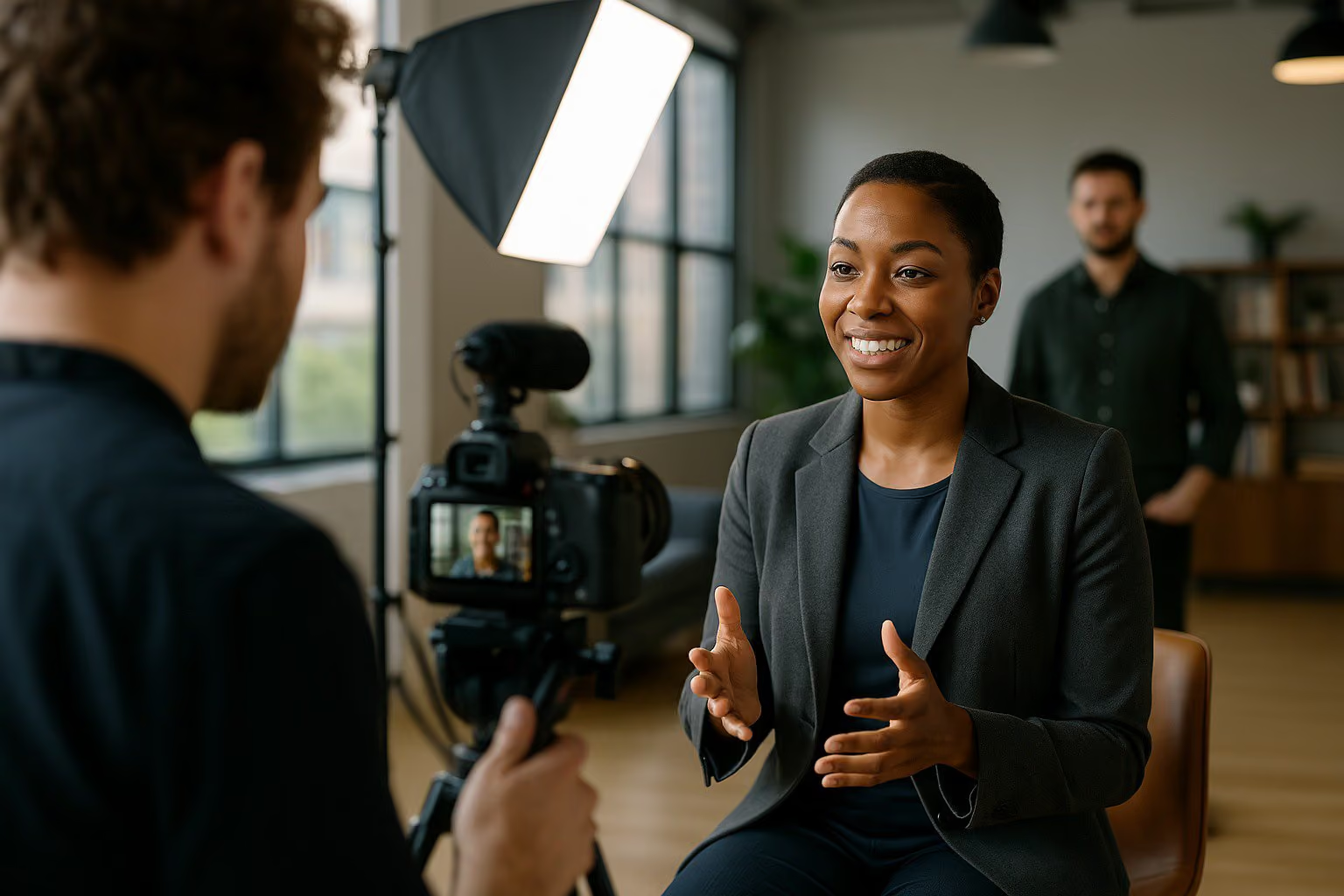
Secure the right location, lighting, audio setup, and camera equipment. Quality matters. Poor sound or distracting visuals reduce confidence and undermine the credibility of otherwise strong testimonials.
Client preparation
Schedule a brief prep conversation. This is not about scripting. It is about helping the client feel comfortable and reminding them of the milestones in their customer journey.
When companies skip these steps, testimonial videos often feel unfocused.
When production is structured, testimonial videos gives clarity, professionalism, and strategic intent.
Post-Production: Editing for Authenticity
Filming captures the story. Editing shapes how it persuades.
A testimonial video should feel natural, not overproduced. The goal is clarity and credibility, not cinematic flair.
Strong post-production focuses on structure.
- Tighten the narrative. Remove repetition. Keep the customer's journey clear and easy to follow.
- Highlight measurable outcomes. When a client mentions performance improvements, cost efficiency, or time savings, those moments should be emphasized. That is where value becomes concrete.
- Support the story visually. Relevant B-roll, product usage footage, or contextual shots reinforce authenticity. They help the audience understand how the service fits into real life.
Audio quality is non-negotiable. Clean sound builds trust. Distracting noise does the opposite.
Subtitles also matter. Many testimonial videos are viewed on social media platforms without sound. Clear captions increase engagement and accessibility.
Editing is where testimonial videos shift from raw conversation to engaging business content. Done correctly, the final video reflects confidence, quality, and professionalism.
For more in depth prep, check out: Video Production Checklist: Everything You Need Before, During, and After the Shoot
Where to Deploy Your Testimonial Video
A testimonial video should not live in one place on your website and be forgotten.
Customer testimonial videos generate value when you strategically share them across the sales process.
High-impact placements include:
Your website homepage
A strong testimonial above the fold builds immediate social proof and reassures new visitors.
Product or service landing pages
Place videos near pricing, feature breakdowns, or demo CTAs to reduce hesitation.
Sales presentations and proposals
Embedding video testimonials into sales decks adds credibility that written testimonials cannot match.
Email follow-ups
After a discovery call, sharing a relevant customer success story reinforces value.
Social media platforms
Short clips can be repurposed to share customer testimonial videos across social media platforms and attract new customers.
Retargeting campaigns
Prospects who already engaged with your brand respond well to authentic testimonials that reinforce trust.
When testimonial videos are mapped to the full funnel, they help save time for sales teams and strengthen confidence at every stage.
Testimonial videos perform best when treated as strategic proof assets rather than standalone content.
Levitate Testimonial Examples
Execution matters.
Strategic testimonial videos are not theory. They are built around real customers, real results, and real business objectives.
BrainRobotics
Levitate produced a live-action healthcare testimonial that highlighted innovation, product performance, and patient impact. The video focused on measurable improvements and real-world application, helping position the company as a credible leader in its category.
House Buyers of America
This home buying brand created a series of testimonials with Levitate Media to put real client experiences behind an inherently intimidating process - at a point when people are heavily evaluating options. It handles objections up front and early, making taking the next step easier for the viewer.
TABBank
Type caption (optional)
This FinTech testimonial highlights takes a different approach by using employee testimonials to share the heart of their banking services and true client success stories. The video focuses on partnership and trust, putting a face and connection behind the service.
The Hon Company
A manufacturing company highlights their impact through the firsthand experiences of a school transformed by their products. The video builds trust and shows the end value they brought via authentic reviews from real clients.
These examples demonstrate how testimonial videos can be structured differently depending on the target audience and the stage of the sales process.
Explore our testimonial video production services to see how different industries structure customer stories for measurable impact.
Conclusion
Testimonial videos are not just customer interviews. They are structured proof designed to reduce risk and accelerate decisions.
If you are evaluating testimonial video production as a growth investment, talk to Levitate Media. We help marketing leaders turn customer stories into measurable business results.
Request a strategy call or explore our work to see how testimonial videos can support your sales process.
Insights from