Nonprofit video production runs on a different set of rules than most commercial work. The budgets are tighter, the stories are more personal, and the person managing the project is often the same person juggling grants, events, and volunteers.
Most video production companies build their process around brands selling a product. Nonprofit organizations live somewhere else. The people in front of the camera may have never been filmed before, the story might involve someone at a vulnerable moment, and every dollar has to answer to donors, board members, and grant reviewers who expect results.
A production partner who understands those realities does better work, moves faster, and spends your money more carefully. That is the difference between a video that looks nice and one that moves people to give, volunteer, or pay attention.
What Nonprofit Video Production Is\

Nonprofit video production is video content made to move a nonprofit's mission forward. The audience is donors, volunteers, and communities, not customers weighing a purchase. The point is belief and action, not sales.
The nonprofit video production process runs through three stages. Pre production is where goals get set and consent gets handled. Production is where the real impactful stories get captured. Post production is where editing, sound design, and color shape raw footage into something people actually feel.
What separates this from commercial video is who you are talking to and why. A single nonprofit video often has to earn trust with several groups at once: major donors, community members, grant reviewers, and the board. Each one is looking for a different kind of proof.
So the goal is never views for the sake of views. It is meaningful support for the nonprofit's mission, from the people who can actually provide it.
The Nonprofit Video Library: Types That Do the Work
Most nonprofit organizations do better with a small set of repeatable formats than with a pile of one-off, disconnected projects. A tight library gives every video a job and keeps production budgets lean.
Here are the core types that drive real world impact:
Mission video
The anchor piece. Usually two to three minutes explaining who you are and why the work matters. It lives on your homepage and opens donor meetings.
Impact story
A real story from someone your work has reached. It shows the problem, what your organization did, and what changed. These stories tend to connect harder than anything else you produce.
Volunteer recruitment video
Day-in-the-life footage of what volunteers actually do and how it feels. Built to turn viewers into sign-ups.
Event and gala video
Highlight reels from galas, volunteer days, and community events. Play them in the room to build energy, then re-cut them for social afterward. Our event video services page covers this format in more depth.
Advocacy and awareness campaigns
Educational videos that explain a complex issue and raise awareness. They mix data, personal testimony, and a clear call to action.
Donor thank-you video
Short, warm, and personal. A simple way to make donors feel seen and keep them coming back.
Grant-support video
Documented outcomes and narrative proof that strengthen a grant proposal.
Fundraising video
Emotionally driven fundraising campaign videos built around urgency and impact. This one runs deep enough to deserve its own playbook, which we cover separately in our post on turning awareness into action with nonprofit videos.
The best results come from these formats working together, not competing. One strong shoot can feed several of them at once, which is where the real savings live.
Planning Production on a Nonprofit Budget
Every nonprofit budget conversation comes down to two questions. What do we protect, and where do we save?
Protect these:
- Clear, intelligible audio. Bad sound wrecks credibility faster than anything else. If a donor cannot hear the story, the story does not land.
- A strong story with real emotion. This is the part that actually connects. It survives a modest budget. Nothing else makes up for its absence.
- Authentic voices. Real people sounding like themselves, not rehearsed or scripted.
Save on these:
- Fancy locations. Film at your actual program sites. They are more honest anyway.
- Big crews. A small, skilled team plus a local freelancer or two covers most nonprofit shoots.
- Heavy motion graphics. Use them only when they genuinely serve the story.
As for what nonprofit video production costs, the range is wide because scope varies so much. A single, simple impact story generally runs a few thousand dollars. A comprehensive campaign video with multiple stories and versions typically lands in the low to mid five figures. A multi-location, documentary-style piece is the top tier and can climb toward thirty thousand dollars or more.
A few things drive the number up or down: how many shoot days you need, travel, animation or motion graphics, how many final edits you want, and how fast you need them. Share a ballpark budget early and a good partner can point you to the most efficient way to spend it.
You can also use the video pricing calculator to get a rough figure for your specific project.
One more thing worth remembering. A well produced video keeps working for two to three years across events, campaigns, and pages. Spread across that lifespan, the upfront cost looks a lot more affordable.
Ethical, Respectful Storytelling
Strong video storytelling moves people to give. But there is a real line between moving someone and using them, and nonprofit video sits right on top of it.
Poverty porn is the term for media that sensationalizes hardship, strips people of agency, and leans on images of suffering to squeeze out pity instead of understanding. It damages trust with donors, and worse, it can shame the very people you exist to serve.
Here is how to keep dignity at the center of your nonprofit video storytelling:
- Use person-first language. Say "a person experiencing homelessness," not "a homeless person." The words shape how the audience sees them.
- Let people tell their own story. Skip the imposed script. Real words in a real voice carry more weight than anything you could write for them.
- Show whole humans. Capture people working, leading, laughing, not only in their hardest moments. A full picture earns more respect than a sad one.
- Treat consent as a conversation, not a form. Explain where the video will appear. Let subjects see the footage. Give them room to change their mind.
It also helps to share a draft with the program staff who know your participants best. They will catch a phrase or an image that feels off before it ever goes public.
This same care shows up in testimonial video production, where beneficiary and client stories carry the same ethical weight. The principles travel across both.
Working With People Who Have Never Been on Camera
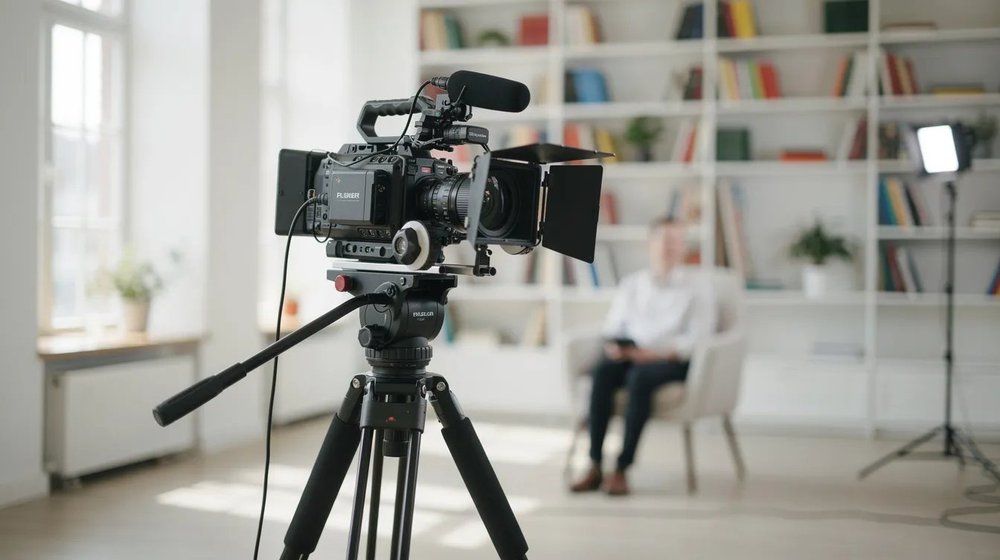
Most of the people you film, staff, volunteers, and the folks your work has reached, are not media-trained. That is a strength, not a problem. Unpolished and genuine connects in a way that a rehearsed performance never will.
Here is how to help a first-timer feel at ease:
- Start with a pre-interview call: A short phone chat before the shoot builds trust and helps you find the most compelling parts of their story ahead of time.
- Send talking points, not a script: People freeze when they try to memorize lines. A few bullet points let them speak naturally.
- Keep the crew small: Two or three people on set, max. Have a staff member they trust nearby for reassurance.
- Open with warm-up questions: Start easy and neutral. Get them talking and relaxed before you move into the deeper interview questions.
- Handle emotional moments with care: Tell them what is coming. Offer breaks. Make sure support is there afterward if a story gets heavy.
The more real and human your subject feels, the more your audience leans in. A clear call to action at the end then gives that emotion somewhere to go.
Getting Several Videos From One Shoot Day
This is the biggest cost-saver in professional nonprofit video production. One shoot day, planned well, can fill an entire content library instead of producing a single clip.
From one well-planned day, you can walk away with:
- A three-minute mission video for your homepage
- Two or three short impact stories for donor cultivation
- Several sixty to ninety second social media clips
- A donor thank-you video
- A library of b roll for future campaigns and annual report videos
The trick is planning for it up front. Build a multi-purpose shot list, and ask evergreen interview questions instead of tying everything to one moment. Ask "what does this organization mean to you?" rather than "what happened at the event last month?" The first answer stays useful for years. The second expires the moment the event does.
Short cuts from that same footage travel well across different platforms, which stretches your reach without stretching your budget.
One practical ask before you wrap: request both the finished edits and the organized raw footage. That way you can come back later for new cuts and multiple versions without paying for a whole second shoot.
Measuring Nonprofit Video ROI
Most marketers, 82%, say video gives them a good return on investment, so the question is usually not whether video works but how to prove it for your mission. Pick one main metric per video. Measuring everything at once dilutes your focus and makes the value harder to prove.
Match the metric to the job the video was hired to do:
- Donation piece: Watch conversion lift and average gift size. Did the page with video convert better, and did watchers give more?
- Email campaign: Track click-through. Did the video drive more clicks to your donation pages?
- Social and awareness: Watch shares and view completion. Did people watch past the drop-off point and pass it along?
- Recruitment: Count volunteer applications, not just views.
- Grant work: Track win rate. Did proposals with a video attached land more often?
- Donor stewardship: Watch retention. Did the thank-you video bring donors back for a second gift?
Track the number that matters, share it with your board, and use it to justify the next project. Results on the page are what turn a one-time video into an ongoing program.
How Levitate Media Partners With Nonprofits
Levitate Media is a full-service nonprofit video production partner, focused on turning a nonprofit's mission into content that moves donors, recruits volunteers, and strengthens grant applications.
The approach is collaborative from the start. We work with your development and program staff to align purpose, audience, and metrics before a camera turns on, and we plan every shoot to produce a full set of assets, from a hero video down to social cuts and b roll.
Our crews are small, gentle, and used to working in shelters, clinics, schools, and community centers. And our review process is built around the approval chain you actually have, whether that means the board, legal, or program leads.
Affordable production does not mean cutting corners. When you are ready to tell stories that inspire action and drive results, get in touch or explore the nonprofit video services page.
Insights from