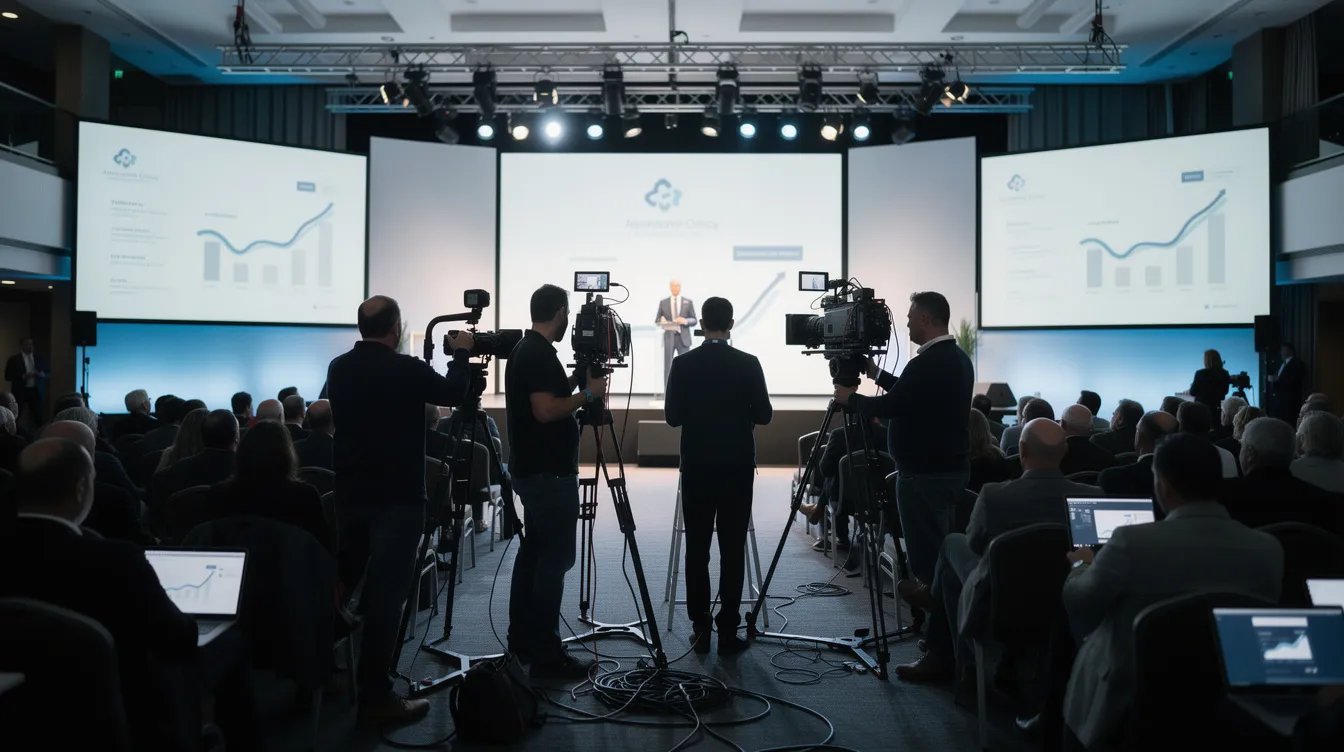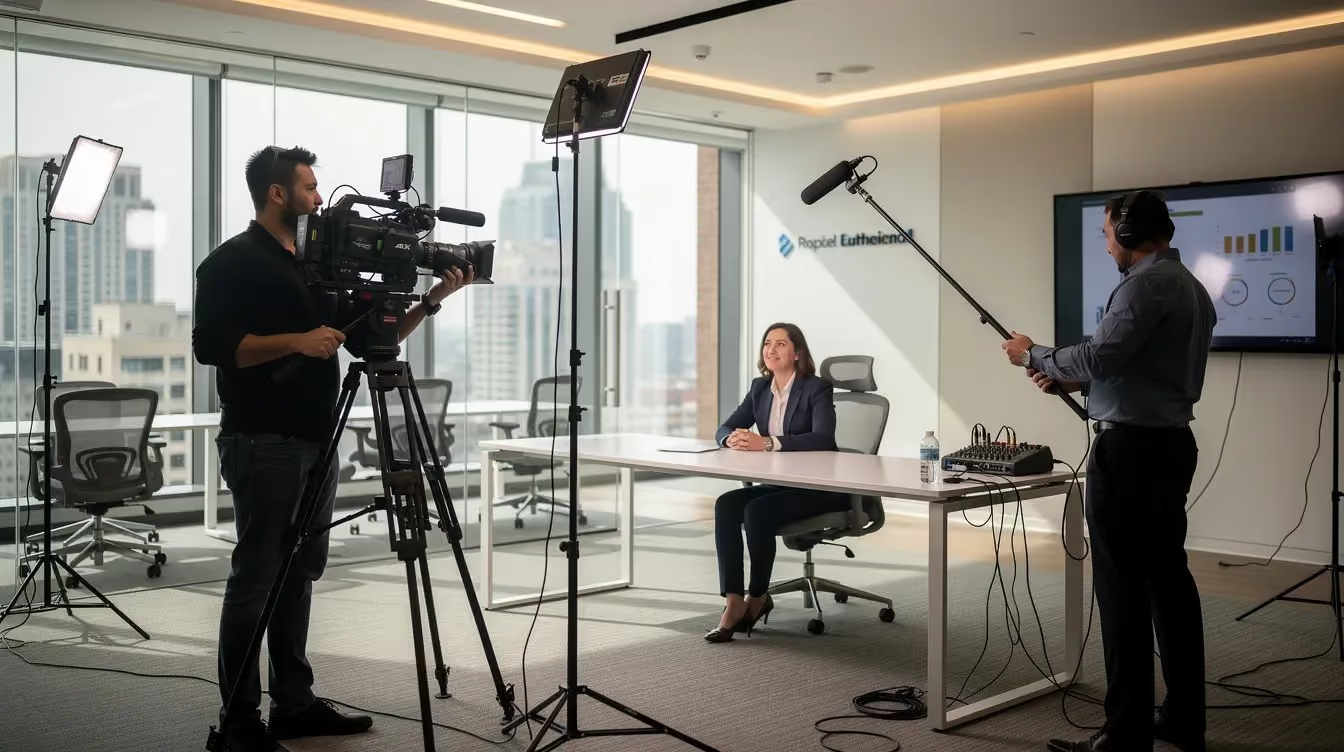
A brand video, also called a brand film, is more than marketing content. For growth-stage B2B companies, a single video can create a consistent first impression across websites, Google Ads, YouTube, sales decks, and internal communications. It grabs attention, builds trust, and connects with viewers emotionally from the first few seconds.
High-quality videos showcase your company’s culture, core values, and identity while reaching the right audience across multiple platforms.
Creating a strong video begins with careful planning, a clear marketing strategy, and a production team that can tell a compelling story. With the right approach, one project can produce multiple assets that drive results, increase conversions, and leave a lasting impact on your audience.
This guide covers every phase of brand video production, from creative brief to final cut. You will walk away with a clear production process, realistic expectations, and a strategy built to deliver results.
What Is Brand Video Production?
Brand video production is the deliberate process of creating professional video assets that express your company’s identity, value proposition, and personality to a defined audience.
It’s not the same as a product demo, an explainer video, or a social clip. Those serve specific functions. A brand video sits at the center of your content strategy, supporting all other formats and giving every channel a consistent story to build from.
For B2B companies, an effective brand video answers three key questions:
- Who are you?
- Why should I care?
- Why now?
Answering these clearly and translating them into a compelling visual story is what separates a brand film that drives results from one that just looks good.
Careful planning makes the difference. Strategy work usually accounts for 20 to 30% of total project time. That investment prevents costly revisions, misaligned messaging, and the scope creep that can derail production later.
A strong brand video does not happen by accident. It is built, phase by phase, with a clear brief, a focused production team, and a strategy tied directly to your business goals.
Types of Brand Videos and Where They Fit in Your Strategy
Different types of brand video and brand film production formats serve different goals, from building awareness at the top of the funnel to closing trust at the bottom.
The smartest approach is designing one production day to yield multiple video assets. A 90-second hero film, 30-second cutdowns, vertical social clips, and internal versions. That multiplies the value of your video investment across multiple platforms without multiplying your budget.
Here are the four core formats every B2B brand should know.
Website Hero Video
This is your primary brand film. It lives on your homepage and is the first thing potential customers see when they land on your site. Keep it 60 to 90 seconds, auto-captioned, and optimized for silent autoplay.
Structure it around a strong hook in the first few seconds, followed by who you serve, what makes you different, and a closing beat that reinforces your core values. Use real locations, real teams, and real customer environments. Avoid stock footage.
Deliver multiple aspect ratios from this one asset. 16:9 for your website and YouTube. 1:1 and 9:16 for social and Google Ads.
Client-Facing Brand Overview Video
This is a sales enablement tool. Your sales team uses it in outbound emails, LinkedIn outreach, sales decks, and trade show loops. Keep it 60 to 120 seconds.
Lead with clear positioning, the core problem you solve, your solution, proof points with real outcomes, and a confident call to action. Ground the tone in results, not hype.
Employer Brand and Culture Video
These videos attract talent, support onboarding, and showcase your company's culture to the right audience. Aim for 90 to 180 seconds and feature real employees across roles and seniority levels. Let them speak to why they joined and why they stay.
Place these on your careers page, LinkedIn campaigns, and onboarding sequences. A genuine culture video builds a stronger connection with candidates than any job description ever will.
Animated Brand Video
When your product is complex, abstract, or does not yet have a physical form, animation is the right call. It lets your production team explain technical concepts through visual storytelling without relying on footage that may not exist yet.
2D animation works well for SaaS platforms and process explanations. Mixed media combining live action and motion graphics gives you both human connection and clarity. Animation also ages better than live action footage tied to specific employees or office environments that will eventually change.
Not sure which format fits your goals? Browse the Levitate Media video portfolio to see how each approach performs across different industries.
Why Brand Video Matters For B2B

Brand video production connects directly to revenue, pipeline velocity, and hiring outcomes. It is not about views for the sake of views.
Here is what the data shows:
- Viewers retain 95% of a video message versus 10% from text.
- Adding a high‑quality video to landing pages can boost conversions significantly, in some cases by up to 80%.
- Around 70% of B2B buyers engage with video during their purchase journey, making video essential at every funnel stage.
- Most buyers rely on video to learn about products and services, with about 96% using video for deeper understanding.
- Short‑form B2B videos under 90 seconds now hold around a 58% average retention rate, showing how quickly video can capture attention.
Video doesn’t just increase engagement; it also helps buyers understand complex offerings, makes your messaging stick, and supports decision‑making throughout long B2B sales cycles.
Internally, video marketing aligns sales, product, HR, and leadership around a consistent message, reducing friction and increasing cross‑team clarity on what the brand stands for and why it matters.
Want to see what high quality videos look like in practice? Check out these brand video examples across industries to see the results for yourself.
The Brand Video Production Process

A brand video does not come together on shoot day. It comes together in the weeks of careful planning that happen before the camera turns on. Here is how a professional video production process works from start to finish.
Typical timeline: 4 to 8 weeks from kickoff to final delivery, depending on scope and complexity.
Phase 1: Discovery and Strategy
Every production decision flows from the strategy work done before cameras roll. This is the phase most brands rush. It is also the phase that determines whether your brand video actually performs.
Before any scripting or filming happens, your production team needs full clarity on four things:
- Who you are talking to and what they actually care about
- What your brand narrative is and how it differs from competitors
- Where this video will live and what each platform requires
- What success looks like and how you will measure it
The outputs from a strong discovery phase include your audience definition, core message hierarchy, tone of voice framework, and distribution channel plan. These become the foundation every creative decision is built on.
CMOs and Marketing Directors should come prepared with their ICP definitions, current positioning documents, and recent campaign performance data. The more clarity you bring in, the less you spend fixing things in post production.
This phase typically accounts for 20 to 30% of total project time. That investment prevents the scope creep that inflates budgets and the messaging misalignment that kills performance after launch.
Phase 2: The Creative Brief
A strong creative brief is what separates a smooth production from a chaotic one. It aligns your internal team, your agency or production partner, and every decision-maker before a dollar is spent on crew or equipment.
What a brand video creative brief should include:
- Brand voice and tone: How does your company sound? Confident and direct? Warm and accessible? Technical and authoritative? Define it clearly with examples of content that gets it right and content that does not.
- Key messages: Identify your top three to five proof points. These are the specific, credible claims your video needs to land. A market position, a customer outcome, a differentiator. Avoid generic statements.
- Visual references: Share two to three brand videos from other companies in or outside your industry that reflect the look, feel, or tone you are after. This removes ambiguity from creative conversations faster than any written description.
- Must-have shots: Are there specific locations, products, team members, or customer environments that need to appear on screen? List them explicitly.
- Interview subjects: Who will speak on camera? Leadership, customers, or employees? Each creates a different impression. A mix is often the strongest choice.
- Runtime target: 60–90 seconds is the standard for most brand videos. Going longer requires a strong reason.
- Distribution plan: List every channel where this video will live. This drives decisions about aspect ratios, caption style, and editing pacing from day one.
A tight creative brief prevents overruns in both time and budget. It also gives your production partner everything they need to push back productively, which is a good sign, not a bad one.
Phase 3: Pre-Production
Pre-production is where the creative brief becomes an executable plan. This is the phase most clients underestimate and the one most production companies will want to move through quickly. Do not let that happen.
Scripting approaches, choose the right one for your content:
- Interview-driven. Leadership or customers speak authentically on camera. Their words are then shaped in the edit. This produces the most credible, human feel and works well for brands where trust is the primary purchase driver.
- Scripted narration. A written script is delivered via voiceover or directly to camera. Gives you tighter message control and works well for fast-paced, visually-driven brand films.
- Hybrid. The most common approach. Key messages are scripted and delivered via voiceover, while interview sound bites and B-roll footage carry the emotional weight. Combines the control of narration with the authenticity of real voices.
Other pre-production essentials:
- Location scouting and permits
- Talent considerations. Real employees and customers outperform actors for B2B brands. Coach them, do not over-script them
- Shot list development. Every visual that needs to be captured, sequenced by location and setup for efficiency
- Timeline planning. Map shoot days against your hard deadline and build in a buffer. Production delays compound quickly
For brands in healthcare or financial services, pre-production also includes legal and compliance review of all scripts and messaging. This step is non-negotiable and needs to be scoped into the timeline from the start.
Phase 4: Production Day
A well-prepared shoot day runs predictably. A poorly prepared one is expensive.
Here is what a typical brand video production day looks like from start to finish:
- Early call time for lighting and equipment setup
- Interview setups first, controlled environment, most scheduling-dependent
- B-roll capture across locations, facilities, and product environments
- Final shots and any remaining footage before wrap
- Quick review to confirm everything on the shot list is captured before the crew leaves
How to Prepare Your Team
Brief your interview subjects in advance. Not with a full script but with the three or four key points you want them to speak to. Let them know the shape of the questions ahead of time. Authenticity comes from real conversation, not memorized lines.
Your employees and satisfied customers are your strongest on-camera assets. A little preparation goes a long way toward helping them showcase authenticity and speak naturally about your brand's values and company's culture.
Have a designated decision-maker on set for key shoot days. When your production team needs a call on a location, a message, or a creative direction, waiting 24 hours for an email reply is not an option. Real-time decisions keep momentum and protect your timeline.
Common Day-of Mistakes to Avoid
These are the issues that eat into your shoot day and show up in post production:
- Overscheduling interview subjects without buffer time between setups
- Bringing too many internal stakeholders onto set
- Changing key messages on shoot day after the brief was approved
- Not having contingency plans for weather or location access issues
- Assuming the production team knows your brand's personality without a proper briefing
One more thing. If your product or service is complex, consider having a subject matter expert on call during the shoot. Not on camera. Just available. It saves time when technical questions come up mid-day.
Phase 5: Post-Production
Post-production is where raw footage becomes a brand asset. For most B2B brands, this is also where the value of careful pre-production becomes visible or where gaps in planning start showing up.
Here is what the post-production workflow covers:
- Editing: Structure, pacing, and story. The editor shapes your footage into the clearest version of your brand narrative
- Music selection: Music drives emotional tone more than almost any other element. It should be chosen early in the edit, not added as an afterthought. License it properly
- Color grading: Footage is graded to match your brand identity and create a consistent look across all locations and lighting conditions
- Motion graphics: Lower thirds identifying speakers, data visualizations, branded transitions, and end cards
- Sound mixing: Dialogue, music, and ambient sound balanced for every platform your video will live on
- Versioning: Your hero film cut down into every format your distribution plan requires
The Review Process
A professional post-production process runs three review cycles:
- Rough cut for structure and pacing
- Fine cut for detail, tone, and polish
- Final approval and export in all required formats
Protect each review cycle with a clear feedback deadline. Stakeholder delays are the single biggest cause of missed launch dates. Agree on who has final approval authority before the edit even starts.
Final Delivery Formats
A single brand video shoot should produce multiple video assets:
- Full-length hero film in 16:9 for your website and YouTube
- 15 to 30 second cutdowns for Google Ads and paid media
- Square and vertical versions for LinkedIn and social
- Captions burned in for silent auto-play on company websites
- Internal version for sales decks and onboarding
Start building your launch plan while the edit is still in progress. Homepage updates, email campaigns, and paid media tests should all be mapped before the final file lands in your inbox.
Brand Video Styles: Which Approach Is Right for Your Brand
The format of your brand film matters as much as the message inside it. Different styles create different impressions, serve different audiences, and suit different budgets.
Here is how to choose the right one.
Documentary style
Built from real interviews and authentic footage with minimal scripting. Works best when trust is the primary purchase driver: professional services, healthcare, mission-driven companies. Requires strong on-camera subjects and skilled storytelling in the edit. When it lands, it's the most credible format available.
Cinematic brand film
Highly produced, visually ambitious content that leads with emotion and aspiration. The style brands choose when they want to position as a category leader. Budget requirements are higher, but the output anchors your content strategy for two to three years. Strong choice for rebrands, funding rounds, or market expansions.
Employee-driven
Centers on the people inside your organization: their motivations, expertise, and day-to-day work. Particularly effective for recruiting, culture building, and employer brand. Tends to sit at a lower production budget than cinematic work, but requires careful subject selection and solid preparation.
Animated
The right choice when your product is complex, abstract, or doesn't yet have a physical form. SaaS platforms, AI products, financial services, and industrial technology all benefit from animation because live action alone can't always show what the product actually does. Mixed media, live action interviews combined with animated segments, gives you both human connection and visual storytelling clarity.
Not sure which style fits your goals? Browse the Levitate Media portfolio to see how each approach performs across different industries and use cases.
Budget Considerations: What to Expect at Different Investment Levels
Brand video production costs vary widely based on scope, crew size, locations, animation requirements, and the volume of final deliverables. Here's a realistic framework for 2025–2026:
Lean, single-location brand video ($15,000–$30,000) Professional crew, one shoot location, interview-driven or hybrid approach, editing, color, sound, and a standard suite of deliverables. Delivers a credible, high-quality result when strategy and pre-production are handled well.
Mid-range production ($30,000–$50,000) Multiple locations or shoot days, some animation or motion graphics, larger deliverable suite including social cutdowns and vertical formats, and more complex post-production.
Full cinematic or multi-day production ($50,000+) Multi-day shoots, heavy animation, travel, custom music, and a comprehensive asset library designed for deployment across a full media plan.
The most important thing to understand: production quality does not scale linearly with budget. A well-planned $20,000 video with a strong creative brief consistently outperforms a $60,000 shoot that went into production without clear strategy. Planning is where quality is made.
Factors that drive cost up:
- Multiple shoot locations or travel
- Heavy animation or VFX
- Rush timelines (under four weeks adds roughly 25% to cost)
- Large volume of final deliverables and format variants
- Legal or compliance review requirements
How to Get an Accurate Quote
Come prepared with your desired video length, number of versions, locations, language or subtitle needs, and your hard deadline. Good production companies give a clear breakdown by project scope. If a quote comes as a single number, ask for details before signing. You can check pricing and get a clear estimate here.
Ready to Start Your Brand Video Project?
If you are planning a brand video, whether it is your first or a refresh of content that is no longer performing, the production process works best when it starts with a clear strategy and a professional video production team that understands your business.
At Levitate Media, we have spent 16 years helping B2B brands in tech, healthcare, finance, and manufacturing turn video into a real business asset. Not just content that looks good. Video that drives the pipeline, supports sales, and builds trust with the right audience.
We handle everything from creative brief to final cut, and we design every shoot to produce multiple video assets from a single production day.
See our brand video work and get a feel for what is possible.
When you are ready to scope your project, request a free quote and we will build a production plan around your goals, your timeline, and your budget.
Insights from