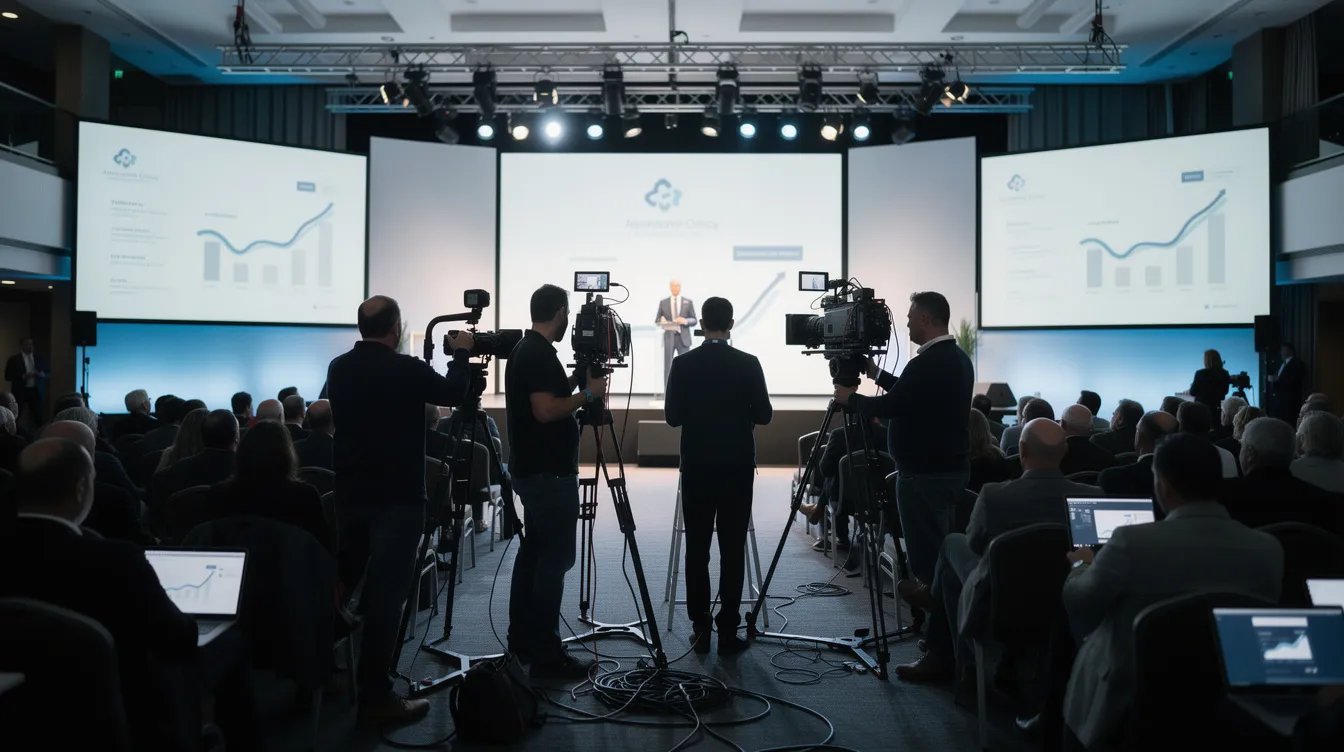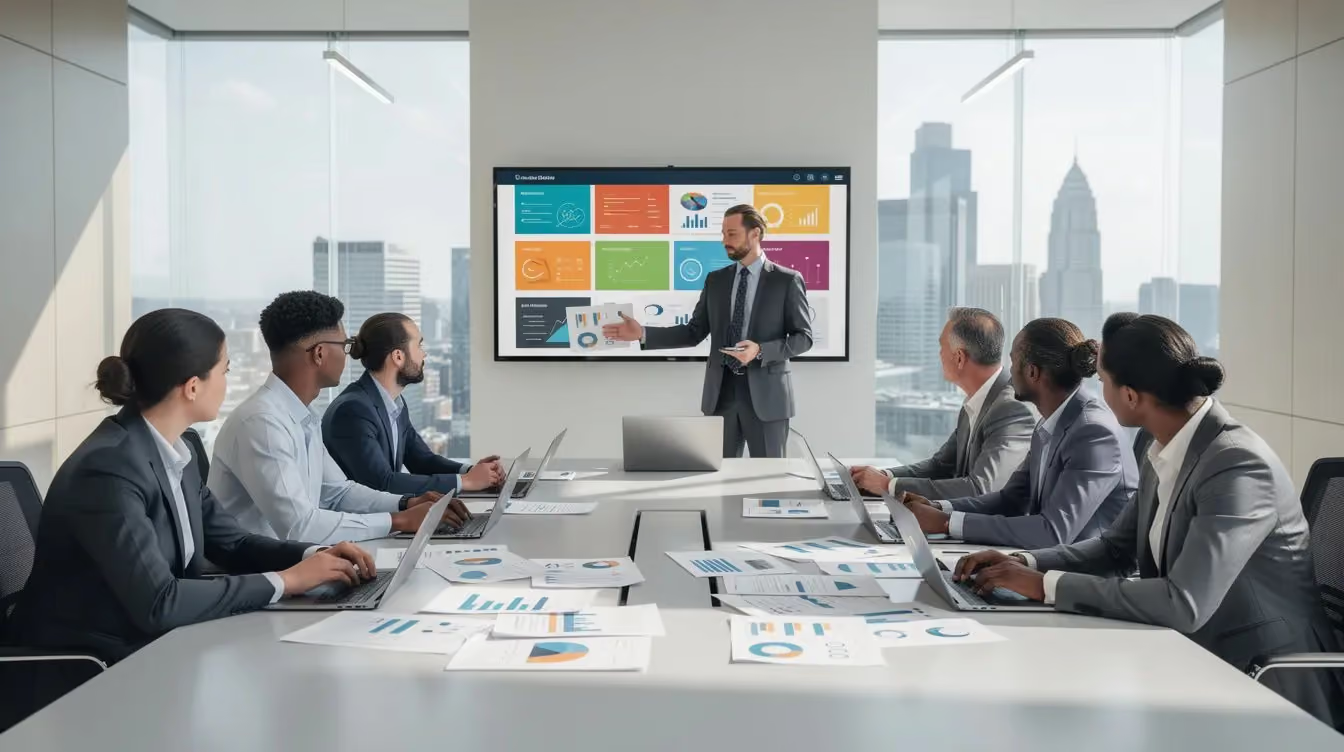

Every marketing leader planning a corporate video hits the same decision point: animate it or film it live?
The answer is not about preference or budget alone. It comes down to what you need the video to do, who needs to watch it, and how long it needs to stay useful.
Corporate animated video production uses animation, motion graphics, and visual storytelling to turn complex business concepts into clear content that drives real outcomes. We have produced both formats for over 16 years across tech, healthcare, finance, and industrial clients. What we have learned is that the format decision matters as much as the script.
We cover when animated corporate video outperforms live action, which animation styles match which business needs, realistic costs and timelines, and when live action is still the right call.
What Is Corporate Animated Video Production (And How Is It Different From General Animation)?
Corporate animated video production uses 2D animation, 3D animation, and motion graphics to communicate business messages. The output is not entertainment. It is a business communication tool built to drive specific outcomes: product understanding, employee alignment, compliance, and faster decision-making.
This distinction matters because the production process is fundamentally different from creative or entertainment animation. Every choice, from script length to visual style to voiceover tone, is tied to a business goal and a target audience. Aesthetics serve the message. The message serves the outcome.
Corporate animation covers a wide range of use cases. Explainer videos that simplify complex ideas for buyers. Training videos that standardize knowledge across global teams. Product demos that show SaaS workflows without a live recording. Investor videos that visualize strategy and traction. Each of these is a different application of the same discipline: animated video production designed around business goals, not creative expression.
Why Corporate Teams Are Choosing Animation Over Live Action in 2026

The shift toward animated video for business is not a trend. It is a response to three structural problems that live action does not solve as well.
Your Content Needs to Work Across Markets and Time Zones
Remote and globally distributed teams need communication that works asynchronously and in multiple languages. A single animated corporate video can be localized with new voiceovers and updated subtitles without reshooting anything. Live action does not give you that flexibility. One asset, many markets.
Live Action Ages. Animation Does Not.
A live action product demo filmed in January can look outdated by March. Offices get redecorated. Employees move on. UI changes. Animated video production gives you assets that stay current because you can update specific sequences without rebuilding the entire video. That means a longer content lifespan and a lower cost per use over time.
Some Concepts Simply Cannot Be Filmed
SaaS workflows, cloud architecture, data security, AI processes, and internal system logic have no natural visual representation in the real world. Animation lets you build those visuals from scratch. Your audience actually understands what you are selling or explaining instead of trying to imagine it from a talking head video.
These are not aesthetic preferences. They are business reasons. And they are why more marketing teams are treating corporate animation as a core production format rather than a secondary option.
5 Corporate Scenarios Where Animation Consistently Outperforms Live Action
Most teams overthink this and pick wrong. But there are five scenarios where animated corporate video consistently delivers better results than live action, regardless of budget or industry.
Explaining Complex Technology, SaaS Workflows, or Abstract Processes
You cannot point a camera at data security. You cannot film cloud architecture or AI workflows in a way that makes them immediately clear to a buyer. Animation solves this by letting your animation team build visuals from scratch using UI mockups, process flows, and visual metaphors that make complex topics concrete.
A 90-second animated explainer video can show how a CRM manages customer data across multiple departments in a way that would take 20 minutes to explain in a live presentation. That is the business case for animation in tech and SaaS: it simplifies complex ideas at a clarity level that live action cannot match.
Communicating Across Global Teams and Multiple Languages
Animation is language-agnostic. Creating animated videos for global teams means localization requires only new voiceovers and subtitle updates. Compare that to reshooting live action with different talent in different regions.
A single animated corporate video can serve APAC, EMEA, and North America with minimal adaptation costs. For global marketing teams, that is a significant operational advantage.
Addressing Sensitive Topics Like Restructuring, Policy Changes, or Compliance

Delivering messages about layoffs, restructuring, or policy changes requires careful tone control. Animation depersonalizes these conversations while maintaining professionalism and clarity. The message lands without putting a specific person in an uncomfortable position on camera.
This also applies to compliance and HR training videos that need to be delivered consistently across the organization without variation in tone or content.
Visualizing Data, Metrics, and System Architecture
Motion graphics and 3D animation can show data flows, architectural diagrams, and infrastructure relationships in ways that static slides cannot. Executives make faster decisions when complex topics are visualized clearly rather than presented as a wall of numbers.
Building Content That Stays Current Without Reshooting
Product marketing teams maintain video libraries longer and at lower cost with animation. When a product UI changes or a feature updates, the relevant animated sequences can be revised without reshooting.
For SaaS companies with rapid release cycles this is a major advantage. A live action product demo filmed in Q1 may look dated by Q3. An animated demo can be updated in days.
Corporate Animation Styles and Which Business Need Each Serves
Choosing the right animation style is a strategic decision, not a creative one. The video style you pick should match your audience, your message, and how the video will be distributed.
Here is how the main styles map to real business needs:
2D Character Animation: Training, Onboarding, and HR Communications
2D animation works best for scenarios involving human behavior, relationships, and workplace situations. Character-based animated videos make training and onboarding content relatable and easier to retain than a talking head or a text-heavy slide deck.
Use cases: customer service training, workplace safety scenarios, compliance training, and new hire onboarding. Most animated explainer videos for internal audiences use this style because it balances clarity with approachability.
Motion Graphics: Data Reports, Process Flows, and Executive Presentations
Motion graphics are the go-to video style for presenting metrics, system architecture, and strategic information. They keep executive presentations moving, make quarterly reviews more digestible, and turn complex concepts into visuals that actually land.
Use cases: board communications, investor presentations, demo videos showing product workflow, and quarterly business reviews.
Isometric Animation: Architecture, Product Systems, and Infrastructure
Isometric animation shows three-dimensional relationships in a two-dimensional space. Think engineering diagrams with motion and narrative. It works particularly well for technical audiences who need to understand how systems connect.
Use cases: software architecture visualization, manufacturing process demonstrations, and infrastructure explainers for IT and operations teams.
3D Animation: Hardware, Industrial Products, and Complex Mechanisms
3D animation is the right choice for showing physical products in action, internal mechanisms, or industrial processes. Computer generated imagery gives buyers a clear picture of how something works before they ever touch it.
Use cases: hardware product demos, industrial equipment operation, and mechanical system visualization.
Whiteboard and Mixed Media: Compliance, Education, and Regulated Industries

Whiteboard animation uses hand drawn animations and illustration styles that convey simplicity and build trust with audiences skeptical of overly polished content. Mixed media combines live action footage with animated overlays for human credibility and visual clarity in a single video.
Use cases: compliance training, educational videos for regulated industries, and any scenario where authenticity matters as much as clarity.
Working with the right animation studio means having access to all of these styles and the strategic guidance to choose between them. The best animated video production company will help you match the video style to your business goals before production starts.
When Live Action Is Still the Right Choice for Corporate Video
Animation is not always the answer. There are four scenarios where live action delivers better results, and choosing animation here would work against you.
- Leadership and executive communications. Investors and employees believe a message more when they see a real person accountable for it. A CEO update or vision statement carries more weight when filmed.
- Culture and recruitment content. Candidates are evaluating the human environment, not a concept. Live action is the only format that shows that honestly.
- Client testimonial videos. A real customer speaking on camera carries credibility that animation cannot replicate. Authenticity is the whole point.
- Facility tours and on-site capability demonstrations. Your actual environment is part of the message. Animating it removes the thing that makes it convincing.
If you are still weighing which format is the right choice, explore our animation vs live action comparison guide here.
The Hybrid Approach: Combining Animation and Live Action for Corporate Storytelling

Most real corporate video decisions do not land cleanly on one side or the other. The most effective business animation videos often combine both formats to get the best of each.
A typical hybrid structure might look like this:
- Live action interviews or executive voiceover for credibility and human connection
- Animated sequences to explain abstract processes, product workflows, or system architecture
- Motion graphics overlaid on live footage to visualize data or highlight key points
- B-roll of offices or facilities combined with animated product demonstrations
This approach works particularly well for product launches, case study videos, and brand storytelling that needs both human faces and visual explanation power in the same video.
The practical advantage is flexibility. You get the authenticity of live action where it matters and the clarity of animation where the camera falls short. For companies with complex products and human stories to tell at the same time, mixed media production is often the most strategically sound choice.
Corporate Animated Video Production Costs and Timelines: What to Budget in 2026
Budget questions come up early in every corporate animation conversation. Here are realistic ranges for B2B corporate animated videos based on video style and complexity.
Motion graphics: $5,000 to $15,000 / 3 to 5 weeks
2D animation: $8,000 to $20,000 / 4 to 6 weeks
3D animation: $20,000 to $50,000+ / 8 to 12 weeks
These are starting points. The biggest levers that affect your final number:
- Video length and complexity
- Number of versions and localizations required
- Custom character design versus template-based motion graphics
- Rush timelines
- Number of revision rounds
- Whether UI builds or custom product assets are needed
Many marketing teams treat each animated video as a standalone creative project. A better approach is scoping multiple videos together. A series gives you better pricing, visual consistency, and a more complete video marketing asset library than commissioning single video projects one at a time. Wistia's State of Video report found that 76% of companies now adjust aspect ratios depending on where they post, which is why scoping format variations into your budget from the start prevents surprises later.
An experienced animation company or animated video agency will help you scope your video needs realistically before production starts.
For planning purposes, explore starting ranges on our video pricing page.
How the Corporate Animated Video Production Process Works
Working with a professional animated video production company should feel structured, not chaotic. Here is what a well-run corporate animation project looks like from start to finish.
Discovery and Strategy
This is where business goals, target audience, distribution channels, and success metrics get defined before anything creative starts. A good animation team asks hard questions here: What does this video need to make a viewer understand, feel, or do? What has worked before? Where will this live?
Script and Messaging
Complex ideas get translated into a concise, runtime-specific script. For most corporate animation projects that means 150 to 200 words per minute of finished video. Every line is written for the ear, not the eye, and matched to the language your buyers actually use.
Concept Development and Visual Design
Style frames establish visual direction and brand identity before animation begins. Storyboards map each line of script to a specific visual so stakeholders can verify workflow accuracy, product UI details, and compliance language before a single frame is animated. This stage is where animation skills and strategic thinking overlap most directly.
Animation, Audio, and Delivery
Scenes are animated, voiceover is recorded and synced, and the video goes through one to two structured review rounds with your production team. Post production includes sound design, color, and final formatting. Final delivery typically includes MP4 files optimized for digital platforms, with aspect ratio variations as needed.
The full process for a standard 2D animated corporate video runs four to six weeks. Complex 3D animation or multi-language versions run eight to twelve weeks. A single video project can often be scoped to produce multiple videos from the same production window, which improves cost per asset significantly.
Next Steps: Planning Your Corporate Animation Project
The format decision is only the starting point. The teams that get the most out of corporate animated video production come in with a clear objective, a defined audience, and a single primary KPI before anything gets scripted.
Before you even brief an animation partner, know what “success” actually means for you. Is it more demo requests? Higher training completion rates? A shorter sales cycle? That one metric ends up shaping every creative choice downstream.
If you’re deciding between animation and live action, the smartest move is getting clarity before you commit budget or production time. Talk to the Levitate Media team and we’ll help you map the right approach for your goals.
Insights from