
Most marketing teams are filming more than ever. Phones, DSLRs, in-house studios, the footage is there. The problem is what happens after the shoot ends.
Raw footage piles up. Your video editors get buried. Content that should have gone live two weeks ago is still sitting in a folder waiting for someone to find the time.
Outsourcing video editing is how high-output marketing teams solve that problem. You keep ownership of your footage and creative direction. A professional video editing team handles the post production work and delivers polished, platform-ready content on your timeline.
This guide covers when outsourcing video editing makes sense, what the process looks like, how to choose the right partner, and what it costs. If your team is capturing good footage but struggling to publish consistently, you are in the right place.
What Does It Mean to Outsource Video Editing?

Outsourcing video editing means your team handles the filming and your video editing team handles everything that happens after the camera stops rolling.
You own the raw footage. You own the creative direction. The external team takes your files and transforms them into finished content that matches your brief, your brand, and your target platforms.
This is not the same as outsourcing full video production. You are not handing off scripting, directing, or filming. You are handing off the post production work: cutting, pacing, color grading, audio cleanup, motion graphics, captions, seamless transitions, and final format delivery.
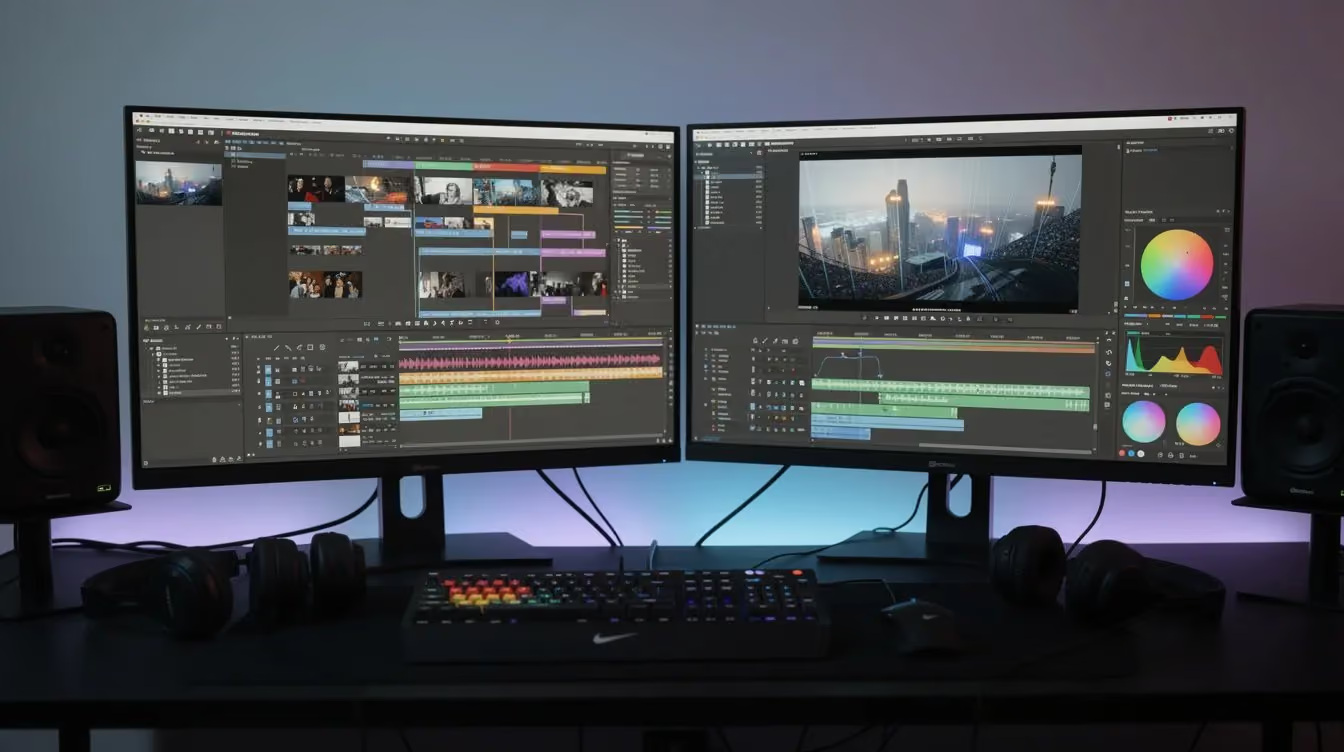
The scope of outsourced video editing services typically includes assembly and narrative editing, color correction and grading, sound cleanup and mixing, motion graphics and lower thirds, captions and subtitles, and multi-format exports for every platform you publish on.
Your remote video editing service provider receives your footage via secure transfer, works from your brief and brand guidelines, and delivers finished files ready to publish. You review, provide feedback, and approve. That is the handoff model in a nutshell.
For B2B marketing teams that film internally but lack the bandwidth or specialist skills to edit at volume, this model is one of the most practical ways to scale video content without adding headcount.
When Should You Outsource Video Editing?
Most teams wait too long. By the time outsourcing feels urgent, you already have a backlog, a burned out editor, and a content calendar that is two months behind.
Here are the signals worth paying attention to before it gets to that point.
- Your footage backlog keeps growing. Raw footage from last quarter is still sitting unedited. Outsourcing clears that backlog and gets your content moving again.
- Your publishing volume has outgrown your team. A single full time editor can only handle so much. Testimonials, product demos, social cutdowns, and internal comms all competing for the same bandwidth is a recipe for delays.
- You need specialist skills your team does not have. Color grading in tools like DaVinci Resolve, motion graphics, and mixed-media edits require dedicated teams with deep expertise. Most generalist editors are not built for that.
- You have a seasonal spike coming. Product launches and trade shows do not wait for your team to catch up. Outsourcing gives you the capacity to scale without burning out your core resources.
- Your entire video operation depends on one person. One editor leaving or going on vacation should not stall your content pipeline. A professional video editing team gives you continuity and consistent turnaround time.
What Types of Videos Can You Outsource for Editing?
Most B2B video content is well suited for outsourced editing. These are the formats marketing teams hand off most often.
Customer Testimonials
Professional editors sync multi-camera interviews with B-roll, add lower thirds, and pull social cutdowns from the same footage. One shoot, multiple assets.
Product Demos and SaaS Videos
Precise cuts, screen recording integration, and annotated graphics that make complex products feel accessible. This is where specialist skills and editing techniques matter most.
Social Media Cutdowns
Taking a longer interview or event recording and pulling short clips optimized for the latest trends on every popular platform. High volume, repeatable, and a good fit for an ongoing editing relationship. This includes YouTube videos, LinkedIn, and Instagram formats.
Event Recaps
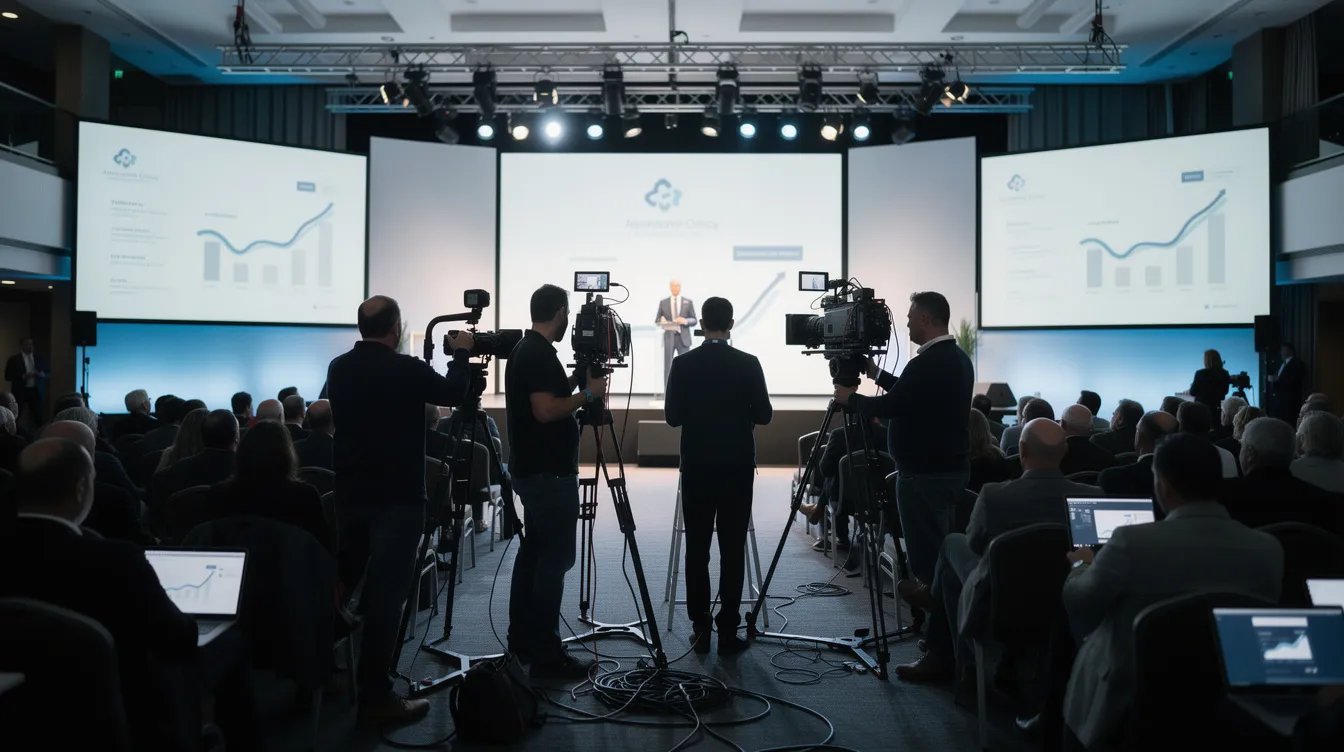
Keynote highlights, attendee interviews, and venue B-roll cut together to extend the life of your event content across platforms.
Internal Communications
Leadership messages, town halls, and HR onboarding content. Clean edits, chapters, and consistent branding without a lot of production complexity.
Explainer Videos
Motion graphics, animation, and voiceover syncing that simplify complex B2B concepts. If your team does not have a motion graphics specialist in-house, this is one of the best things to outsource.
If you want to see more examples of these formats, the Levitate Media video editing service page is a good place to start.
Freelance Editor vs. Editing Agency vs. Full-Service Production Partner
Freelance Video Editors

Freelancers are the lowest-cost entry point. Rates typically run between $25 and $75 per hour depending on skill level and experience. For one-off projects where brand consistency matters less, a freelancer can get the job done.
The tradeoff is reliability. Freelancers have availability gaps, varying quality levels, and high turnover. Building a consistent style across dozens of videos is difficult when you are working with different editors on different projects. Scalability is also limited; one freelancer has a limited ability to scale.
Video Editing Agencies

Agencies offer more structure. You get dedicated teams, defined turnaround times, and account management that keeps projects moving. Costs run higher than freelancers but the consistency and reliability are significantly better for teams publishing at volume.
The limitation is that many editing agencies are generalists. They handle the technical execution well but may not understand your marketing goals, your industry, or how your video content fits into a broader business strategy.
Full-Service Production Partners

A full-service partner like Levitate Media goes beyond editing. You get specialist skills across motion graphics, color grading, animation, and mixed-media production. You also get strategic guidance on how each piece of content should be structured, formatted, and distributed.
This option costs more than a freelancer or a basic editing agency. But for B2B marketing teams where video quality and brand consistency directly affect how your company is perceived by buyers, the investment makes sense.
The right choice depends on your project requirements. One-off social clips might suit a freelancer. Ongoing programs with consistent output and real business stakes warrant a partner who understands both the craft and the strategy behind it.
How to Prepare Your Footage for Handoff
Organize Your Files
Use clear naming conventions so your editing team can navigate large shoots without confusion. Something like "ClientName_Date_Scene_Take" works well. Group your files by scene, B-roll, and any screen recordings separately.
Include Your Brand Guidelines
Share your fonts, colors, logo files, and tone descriptors. Include two or three reference videos that show the style you are going for. This gives your editor a clear target to hit on the first edit rather than guessing.
Provide Shot Notes
A simple document listing key timestamps and research notes and selects makes a significant difference. Something like "2:15 to 2:40: product overview, use with screen recording" tells your editor exactly what matters and what can be cut.
Specify Technical Requirements
Note your frame rate, resolution, and audio channels upfront. If you shot in 4K ProRes, confirm your partner can handle the file sizes. If you need specific export formats for your platforms, include those in the brief.
Use the Right Transfer Tools
Frame.io, Dropbox Business, and Google Drive all support secure transfers of large footage files. Frame.io in particular allows frame-accurate feedback during the review process, which keeps revision rounds focused and efficient.
Write a Clear Brief
Even a one-page brief covering target audience, video purpose, key messages, tone, and platform requirements gives your editing team everything they need to create strong work without coming back to you with basic questions.
The more context you give upfront, the faster and cleaner your first edit will come back.
What to Look for in a Video Editing Partner

These are the qualities that separate a reliable partner from one that creates more work than they save.
- A B2B portfolio: Ask to see testimonials, product demos, and corporate content from industries similar to yours. Wedding reels and travel videos do not prove expertise in a business context.
- Reliable turnaround time: Look for clearly defined delivery windows backed by dedicated teams. A partner who can commit to consistent timelines is one you can actually build a content calendar around.
- A clear revision policy: Two to three rounds should be standard with each round defined upfront. Vague revision policies lead to scope creep and frustration on both sides.
- Strong data security practices: Ask about encrypted transfers, NDA agreements, and file retention policies before sharing any sensitive footage. This matters especially for pre-launch products, financial content, and internal communications.
- Communication that works for your team: Your partner should be responsive and easy to work with. If communication feels difficult in the first conversation, it will not improve.
- White-label capability: If you are an agency, confirm your partner can deliver unbranded outputs to connect with your clients seamlessly.
A good editing partner functions as an extension of your team, not just a vendor you hand files to.
Cost Effectiveness and Time Savings When You Outsource Video Editing
Pricing depends on complexity, length, and how many formats you need. Here is what to expect across common B2B video types.
- Social media cutdowns (one to two minutes). Trims, captions, and re-format exports typically run $600 to $1600 per video.
- Customer testimonials (three to five minutes). Multi-camera sync, B-roll integration, and lower thirds typically run $800 to $2,000 per video.
- Product demos (five to ten minutes). Screen recording integration, annotations, and graphics typically run $1,500 to $4,000 per video.
- Event recaps (five to fifteen minutes). Extensive B-roll integration, music, and text overlays typically run $2,500 to $6,000 per video.
- Animated explainers. Motion graphics heavy projects typically run $3,000 to $8,000 depending on complexity.
Some partners charge hourly, some per video, and some offer monthly retainers for teams with consistent output needs. Retainers usually mean better turnaround times and lower per-video costs as volume grows.
Where the real cost effectiveness shows up is when you factor in everything else: software licenses, the salary of a full time editor, and the hours your team spends on video editing tasks they were not hired to do.
That time has a cost too. For broader context on how B2B teams are budgeting for video, Wistia's State of Video report is worth a look.
For a transparent estimate on your next project, you can use the Levitate Media pricing page to get a sense of what your budget covers.
Common Mistakes When Outsourcing Video Editing
- Sending footage with no context: Raw files with no brief and no reference videos put your video editors in a position to guess. Always include a brief, even a short one.
- Having multiple stakeholders give feedback separately: When three people send conflicting notes directly to the editor, revision cycles multiply fast. Designate one internal owner who consolidates all feedback before it goes back to the editing team.
- Ignoring platform specs until the end: If you need 9:16 for Instagram and 1:1 for LinkedIn but only mention it after the edit is locked, you are looking at full re-exports and wasted budget. Specify every format upfront.
- Choosing on price alone: Spending less money upfront often results in the most rework. Quality and reliability matter more than the hourly rate.
- Skipping the style guide: Without documented brand standards, fonts, colors, and tone, your first few projects will come back misaligned. A simple one-page brand reference prevents most of these issues before they start.
- Treating every project as a one-off: The teams that get the most out of outsourcing build repeatable workflows and ongoing relationships. One-off projects rarely give your editing partner enough context to enhance their work over time.
Ready to Clear Your Video Backlog?
Most marketing teams have more footage than they have time to edit. The content is there. The strategy is there. What is missing is the bandwidth and the right partner to turn raw footage into something that actually gets published.
Levitate Media has worked with B2B marketing teams across tech, healthcare, financial services, and manufacturing for over 16 years and 10,000 videos. We know how to plug into your existing workflow, match your brand standards, and deliver content your team is proud to publish.
Talk to the Levitate Media team or get a video budget estimate for your next project.
Insights from