You've built something valuable. Now you need product launch ideas that get the right people to pay attention.
The best product launch ideas do more than create noise on launch day. They build anticipation before the release, make the value of your product easy to understand, give your audience reasons to engage, and keep momentum going after the initial announcement.
That can mean a teaser campaign, early access program, product launch video, live demo, strategic partnership, customer proof, or a combination of tactics.
The right mix depends on your audience and your goal. But the strongest launches have one thing in common: they are planned as campaigns, not one-day announcements.
What Makes a Product Launch Successful?
A successful product launch connects three things:
1. Your product solves a problem your audience actually cares about.
2. Your messaging makes that value clear.
3. And your launch gives people enough reasons and opportunities to pay attention.
That is why launch planning needs to start before the product officially goes live.
A strong product launch usually moves through three phases: building anticipation before launch, creating engagement around launch day, and using proof and follow-up content to extend momentum afterward.
Video can play a role throughout the entire process. Teasers create curiosity. Product demos show the value. Launch videos create a centerpiece for the campaign. Customer stories and social clips keep the message working after launch day.
Before Launch: Build Anticipation

The goal before launch is simple: make sure you are not announcing your product to an audience that had no idea it was coming.
Start giving people reasons to pay attention before the full reveal.
Use teaser content, email, social posts, behind-the-scenes footage, early access invitations, previews, or countdowns to introduce the problem your product solves and hint at what is coming.
You do not need to reveal everything at once. A good pre-launch campaign creates enough curiosity to earn the next interaction.
This is also the time to make sure your messaging is clear. Your audience should quickly understand who the product is for, what problem it solves, and why this launch is relevant to them.
Launch Day: Turn Attention Into Action
Once the product is live, shift from anticipation to clarity.
Show people exactly what the product does and what makes it valuable. Depending on the product, that may mean a launch video, live demonstration, product walkthrough, explainer video, launch event, webinar, or interactive experience.
Give your audience an obvious next step, whether that is buying, requesting a demo, starting a trial, joining a webinar, contacting sales, or learning more.
Launch day should feel like the peak of the campaign, not the beginning and end of it.
After Launch: Keep the Momentum Going

The launch is not finished once the announcement goes live.
This is where early customer feedback, testimonials, user-generated content, product demonstrations, case studies, reviews, and follow-up campaigns become especially valuable.
Use what you learn from early customers to answer questions, address objections, and show the product working in the real world.
The goal is to turn initial attention into credibility and sustained demand.
10 Product Launch Ideas to Try
1. Build a Teaser Campaign
Start the conversation before the product is available.
Release short teasers that reveal pieces of the story over time. You might show a product detail, introduce the problem being solved, reveal part of the design, share a launch date, or hint at a new capability.
Short video works especially well here because you can create multiple variations for social, email, paid campaigns, and your website without revealing the entire product.
The goal is not to explain everything. It is to give your audience a reason to keep watching.
2. Offer Early Access or a VIP Preview
Give customers, prospects, subscribers, partners, or other high-value audiences a chance to see the product before everyone else.
Early access can help you generate feedback while creating a sense of exclusivity around the launch.
For B2B companies, this might look like a private product demo for existing customers, a beta program, an invite-only webinar, or an early-access list.
You can also use feedback from this group to strengthen your public launch messaging.
3. Create a Product Launch Video
A strong launch video gives the campaign a central piece of content that clearly introduces the product and its value.
The video might focus on the problem, reveal the product, demonstrate how it works, show the experience of using it, or combine several of those elements.
From there, the main video can become shorter cuts for social media, ads, email, sales outreach, product pages, and other channels.
If video will be a major part of your campaign, our guide to product launch video strategy breaks down the formats, timing, distribution, and measurement behind a launch video campaign.
You can also explore these product launch video examples for inspiration.
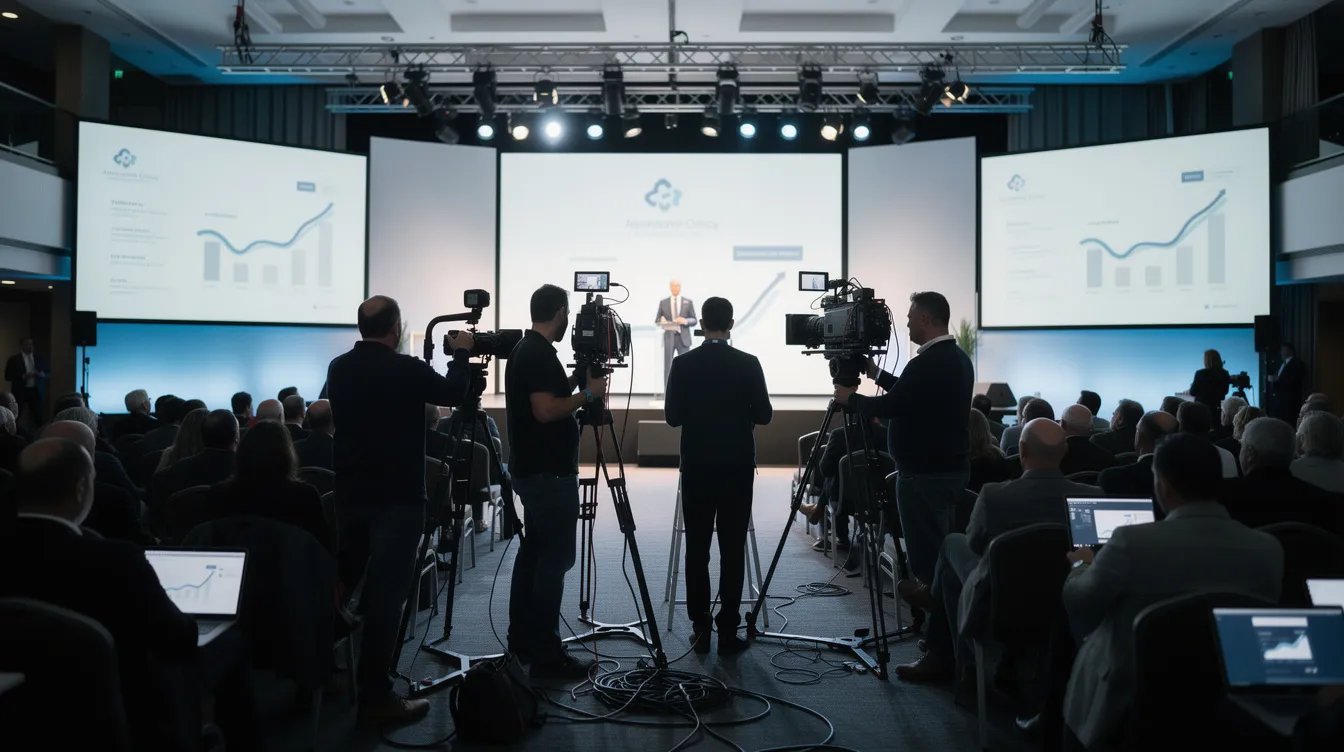
4. Host a Live Demo or Launch Event

A live event gives your audience a reason to experience the launch together.
Depending on your product and audience, that could mean an in-person launch, webinar, livestream, virtual event, product demonstration, panel discussion, or hybrid experience.
For complex B2B products, a live demo can be especially useful because buyers can see the product working and ask questions in real time.
Record the event whenever possible. The footage can later become demos, social clips, sales enablement content, recap videos, and other marketing assets.
5. Partner With Another Brand, Creator, or Industry Expert
A relevant collaboration can introduce your launch to an audience you might not otherwise reach.
Look for partners with complementary audiences rather than simply large audiences.
You might co-host an event, create a joint piece of content, produce a launch video together, offer a bundled promotion, or invite an industry expert to participate in your reveal.
The partnership should make sense for the audience and the product. Reach alone is not enough.
6. Show the Product in Action
Sometimes the most effective launch idea is also the simplest: show people exactly what the product does.
Product demonstrations are especially important when the value is difficult to understand from a feature list or static image.
Show the product solving a recognizable problem. Focus on the use cases and benefits that matter most to the buyer instead of trying to cover every feature.
Depending on the product, this could be a live-action demonstration, screen recording, animation, 3D visualization, walkthrough, or a combination of formats.
For more complex products, an explainer video can help connect features to the bigger business problem being solved.
7. Take People Behind the Scenes
Give your audience a look at what went into building the product.
That might include early concepts, prototypes, design decisions, testing, manufacturing, team interviews, customer feedback, or lessons learned during development.
Behind-the-scenes content makes the launch feel less like an advertisement and more like a story people can follow.
It also gives you multiple pieces of launch content rather than relying on a single announcement.
8. Run an Interactive Challenge, Contest, or Giveaway
Give your audience something to do instead of simply asking them to watch.
A contest, challenge, giveaway, poll, quiz, or interactive reveal can encourage participation and extend the reach of your launch.
The strongest concepts connect naturally to the product. Instead of giving away something unrelated just to collect entries, build the interaction around the problem you solve, the product experience, or the community you want to reach.
You can also encourage participants to create videos, photos, or posts that become user-generated content for the next phase of the campaign.
9. Use Early Customers as Part of the Launch
If beta users, pilot customers, or early adopters have already experienced the product, let them help tell the story.
A customer explaining what changed after using the product can provide a level of credibility that your own launch messaging cannot.
Depending on how much proof you have available, this could take the form of a quote, short testimonial clip, case study, product review, interview, or customer-led demonstration.
Customer proof is especially useful after the initial reveal because it gives prospects another reason to revisit the product once the launch hype settles.
10. Turn the Launch Into an Ongoing Content Campaign
Do not spend your entire launch budget on one hero asset that disappears after launch week.
Plan from the beginning for multiple versions and formats.
Your main launch video might become short social clips. A live demo can become an edited walkthrough. Customer interviews can become testimonial ads. Behind-the-scenes footage can support social posts. Product visuals can be reused in sales presentations and paid campaigns.
Thinking about the launch as a content system gives you more ways to reach buyers and more value from the assets you create.
It also keeps the product visible long after launch day.
How to Choose the Right Product Launch Ideas
You do not need to use every tactic.
Start with the outcome you need.
If your biggest challenge is awareness, focus on teaser campaigns, collaborations, social content, events, and paid promotion.
If the product needs explanation, prioritize demos, walkthroughs, launch videos, webinars, and explainer content.
If buyers need more confidence before taking action, build customer proof, reviews, testimonials, and real-world examples into the campaign.
If your goal is immediate conversion, make the offer and next step extremely clear. Early access, limited-time incentives, trials, bundles, demos, or direct sales CTAs can give interested buyers a reason to act.
The best launch plan is usually a focused combination of tactics that support the same goal, message, and audience.
Build a Product Launch Content Plan

Before production begins, map your content to each stage of the launch.
A simple plan should identify what you need before launch, what will anchor launch day, what can be repurposed across channels, and what you will publish afterward.
This also helps you get more value from production. If you know upfront that you need a hero video, six short social edits, product demonstrations, still imagery, paid ad variations, and behind-the-scenes content, those assets can often be planned and captured together.
That is much more efficient than creating each piece as a separate project after the launch is already underway.
How Video Supports a Product Launch
Video is particularly useful during product launches because different formats can solve different communication problems.
A teaser can create anticipation. A launch video can introduce the big idea. A product demo can show how the product works. An explainer can simplify something complex. Short social edits can extend campaign reach. Customer testimonials can add proof after launch.
The key is deciding what each video needs to accomplish before you make it.
A polished launch video with no clear role in the campaign is just another asset. A video planned around your audience, message, distribution, and next step can continue supporting marketing and sales long after launch day.
How Levitate Media Can Help With Your Product Launch
A product launch gives you a short window when customers, prospects, partners, and your own sales team are paying close attention.
Make that attention count.
Levitate Media helps brands turn product launches into video campaigns built around clear messaging, strong creative, and content that can work across channels.
Whether you need a hero launch video, product video production, an explainer, product demo, commercial, animation, social edits, or a full collection of launch assets, we can build the right production approach around your goals and budget.
Ready to launch something new? Contact Levitate Media to start planning your product launch video campaign.
Insights from